Bill · S. 3710· Senate(119-S-3710)
SOAR Permanent Authorization Act
- Introduced
- 1/28/2026
- Last activity
- 1/28/2026 — Read twice and referred to the Committee on Homeland Security and Governmental Affairs.
- Sponsored by
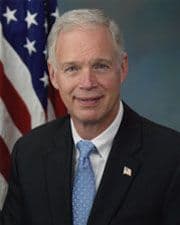
- Ron Johnson
- Cosponsors
- - 1 - 0
- Introduced
- In Committee
What this bill would do
This bill, titled the "SOAR Permanent Authorization Act," aims to amend the existing Scholarships for Opportunity and Results Act. It proposes extending the duration of grants and allowing for renewals without a competitive process. The legislation also modifies application content, residency requirements for board members, and accreditation standards. Additionally, it expands the use of funds to include pre-kindergarten and student academic assistance through tutoring. Finally, it adjusts the evaluation frequency, the scope of evaluations, and increases the authorized appropriation amount for future fiscal years.
Yes· 3 of 8
Would children be better off under this?+5
The bill extends funds for use in pre-kindergarten and provides for student academic assistance through tutoring.
Would students be better off under this?+5
The bill expands the eligible uses of funds to include pre-kindergarten and academic tutoring services.
Would households on low incomes be better off under this?+4
The bill provides more flexible and expanded uses for scholarship funds including tutoring and pre-K.
The opposite
No question was scored the opposite.
Who it would affect, and how
Potential Positive Impacts for People
-
Grant Continuity: Grants can now be renewed for up to 5 additional years without a competitive process if the Secretary deems it appropriate to maintain continuity (Section 2(a)).
-
Expanded Educational Use: Funds can now be used for pre-kindergarten and provides for the expense of providing tutoring services to participating eligible students (Section s 4(a) and 4(c)(1)(A)(i)).
-
Priority Tutoring: If funds are limited, priority for tutoring services will be given to students who previously attended one of the lowest-performing schools under the District of Columbia's accountability system (Section 4(c)(1)(A)(i)).
-
Increased Funding for Appropriations: The authorized amount for appropriations is increased to $75,000,000 for fiscal year 2027 and each succeeding fiscal year (Section 8(a)).
-
Broader Board Eligibility: The residency requirement for eligible entity board members is expanded from the District of Columbia to include the wider Washington metropolitan region, including specific counties and cities in Maryland and Virginia (Section 2(b)(2)(A) and 2(b)(2)(B)).
Potential Negative Impacts for People
-
Admissions Interference Risks: The bill includes language clarifying that the application process should not interfere with the regular admission standards or procedures of a school (Section 2(b)(1)).
-
Scholarship Caps: Eligible entities are granted the sole authority to establish a maximum scholarship amount that is less than the amount permitted in other sections (Section 4(b)).
Groups and Interests Ranking
Every group the model scored this bill for, from -10 to +10. Hover a score for the reason it gave.
- Demographic And Interest Groups
- Good For Children+5Good For Students+5Good For Low Income Households+4Good For Young Adults+3
- Education And Technology
- Improves College Affordability+3
- Governance And Ideology
- Improves Government Transparency+2
- Social Issues And Justice
- Improves Poverty Reduction+2
- Economy And Finance
- Improves Fiscal Responsibility+1
- 1/28/2026
- Read twice and referred to the Committee on Homeland Security and Governmental Affairs.
- 1 Cosponsor added.
- Introduced in Senate
One bill Congress.gov lists as related to this one — companions in the other chamber, earlier versions, and bills this one absorbed or was folded into.
 Tim Scott
Republican · South Carolina