Bill · S. 3565· Senate(119-S-3565)
SUCCESS for BEAD Act
- Introduced
- 12/18/2025
- Last activity
- 12/18/2025 — Read twice and referred to the Committee on Commerce, Science, and Transportation.
- Sponsored by
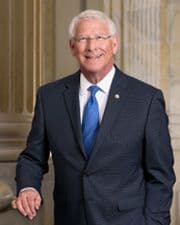
- Roger Wicker
- Cosponsors
- - 1 - 0
- Introduced
- In Committee
What this bill would do
The "SUCCESS for BEAD Act" modifies the Infrastructure Investment and Jobs Act to allow the use of leftover funds from the Broadband Equity, Access, and Deployment (BEAD) Program. These remaining funds would be used for competitive subgrants to support specific projects, including public safety, national security, and workforce development. The bill specifically emphasizes the deployment of AI-supportive telecommunications infrastructure and the modernization of 9-1-1 networks. It also establishes rules for matching funds and a public challenge process for fiber projects to prevent overbuilding.
Yes· 3 of 13
Would Native Americans be better off under this?+8
Explicitly prioritizes infrastructure projects on Tribal lands.
Would people in rural areas be better off under this?+8
Focuses on deploying broadband in unserved and underserved rural regions.
Does this get reliable internet to more people?+8
Directly funds the expansion of high-capacity fiber and wireless infrastructure in underserved areas.
The opposite
No question was scored the opposite.
Who it would affect, and how
Potential Positive Impacts for People
-
Improved Emergency Services: The bill allows funds for the planning, implementation, or maintenance of Next Generation 9-1-1 in emergency communications centers, which aims to ensure secure and interoperable systems for processing emergency requests (Section 3(a)(4)(F)(A)(i)(III)).
-
Job Training and Education: It authorizes subgrants for workforce development programs to address worker shortages in the telecommunications, cybersecurity, artificial intelligence, and electrical distribution sectors (Section 3(a)(4)(F)(A)(i)(II)).
-
Expanded Connectivity in Underserved Areas: The bill requires that subgrant awards prioritize projects in regions that are unserved or underserved by infrastructure, including Tribal lands (Section 3(a)(4)(F)(D)(i)).
-
Enhanced National Security and Safety: Provisions support the hardening of networks and the connectivity of military installations and national laboratories to protect public safety and national security (Section 2(3) and Section 3(a)(4)(F)(D)(iv)).
Potential Negative Impacts for People
-
Financial Burden on Grantees: Most subgrants require the recipient to provide a matching contribution of at least 25 percent of the project costs, which may be a burden for some applicants (Section 3(a)(4)(F)(F)(i)).
-
Strict Limitations on Fund Use: Funds cannot be used for the construction, operation, or expansion of data centers whose primary purpose is processing and storing digital information, which may limit the scope of potential local technological growth (Section 3(a)(4)(F)(C)).
Groups and Interests Ranking
Every group the model scored this bill for, from -10 to +10. Hover a score for the reason it gave.
- Demographic And Interest Groups
- Good For Native Americans+8Good For Rural Residents+8Good For Farmers+6Good For Low Income Households+6Good For Students+5Good For Young Adults+5Good For Business Owners+4
- Economy And Finance
- Increases Job Creation+5Improves Economic Growth+4Improves Small Business Support+3
- Education And Technology
- Improves Internet Access+8
- Environment Energy And Infrastructure
- Improves Rural Development+7
- National Security And Foreign Policy
- Improves Cybersecurity Defense+6
- 12/18/2025
- Read twice and referred to the Committee on Commerce, Science, and Transportation.
- 1 Cosponsor added.
- Introduced in Senate
One bill Congress.gov lists as related to this one — companions in the other chamber, earlier versions, and bills this one absorbed or was folded into.
 Shelley Capito
Republican · West Virginia