Bill · S. 3340· Senate(119-S-3340)
21st Century STEM for Girls and Underrepresented Minorities Act
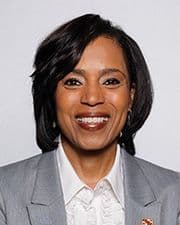
- Introduced
- 12/3/2025
- Last activity
- 12/3/2025 — Read twice and referred to the Committee on Health, Education, Labor, and Pensions.
- Sponsored by
- Angela Alsobrooks
- Cosponsors
- - 2 - 0
- Introduced
- In Committee
What this bill would do
This bill, known as the "21st Century STEM for Girls and Underrepresented Minorities Act," seeks to amend the Elementary and Secondary Education Act of 1965. It establishes a program where the Secretary provides competitive grants to qualified local educational agencies. These funds are intended to support STEM education activities for girls and underrepresented minorities. The program aims to encourage participation in science, technology, engineering, and mathematics fields. Each grant is scheduled to last for four years at a rate of $250,000 per year.
Yes· 3 of 14
Would children be better off under this?+5
The bill funds educational resources, tutoring, and career preparation for students in K-12.
Would Black Americans be better off under this?+5
The bill provides resources to support underrepresented minorities in pursuing STEM careers.
Would Hispanic Americans be better off under this?+5
The bill provides resources to support underrepresented minorities in pursuing STEM careers.
The opposite
No question was scored the opposite.
Who it would affect, and how
Potential Positive Impacts for People
-
Career Preparation and Awareness: The bill allows for activities that prepare students for STEM careers and educate parents about the advantages of these fields (Section 2(c)(1)-(3)).
-
Direct Educational Support: Students can benefit from tutoring, mentoring, and after-school or summer programs designed to develop interest and skills in STEM (Section 2(c)(4)-(8)).
-
Experiential Learning: The program can fund field trips to higher education institutions and provide exposure to professional role models (Section 2(c)(5), (10)).
-
Resource Accessibility: Grants can be used to purchase instructional software, educational materials, and technical equipment for teaching (Section 2(c)(9)).
-
Academic and Professional Advancement: The bill provides for academic advice for high school course selection and can cover up to 50 percent of the cost of a STEM internship (Section 2(c)(11)-(12)).
-
Teacher Development: Funds can be used for professional development to help teachers eliminate gender and racial bias and create more positive classroom environments (Section 2(c)(13)).
Potential Negative Impacts for People
-
Grant Restrictions: Local educational agencies are prohibited from using these grant funds to replace existing non-Federal funds, meaning the money must only be used to supplement current resources (Section 2(e)).
-
Administrative Requirements: Agencies must meet specific application requirements and submit annual written evaluations that include assessments of student academic progress (Section 2(b), (f)).
Groups and Interests Ranking
Every group the model scored this bill for, from -10 to +10. Hover a score for the reason it gave.
- Demographic And Interest Groups
- Good For African Americans+5Good For Asian Americans+5Good For Children+5Good For Hispanic Americans+5Good For Native Americans+5Good For Students+5Good For Women+5Good For Low Income Households+4
- Social Issues And Justice
- Improves Gender Equality+5Improves Racial Equity+5
- Education And Technology
- Increases Public School Funding+4Increases Scientific Research Funding+1
- Economy And Finance
- Improves Economic Growth+1Increases Job Creation+1
- 12/9/2025
- 1 Cosponsor added.
- 12/3/2025
- Read twice and referred to the Committee on Health, Education, Labor, and Pensions.
- 1 Cosponsor added.
- Introduced in Senate
One bill Congress.gov lists as related to this one — companions in the other chamber, earlier versions, and bills this one absorbed or was folded into.
 Ben Luján
Democrat · New Mexico
 Jacky Rosen
Democrat · Nevada