Bill · S. 3224· Senate(119-S-3224)
SPEED Act
- Introduced
- 11/19/2025
- Last activity
- 11/19/2025 — Read twice and referred to the Committee on Environment and Public Works.
- Sponsored by
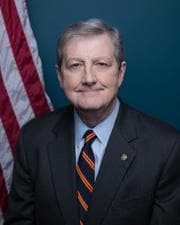
- John Kennedy
- Cosponsors
- None
- Introduced
- In Committee
What this bill would do
The SPEED Act seeks to amend the National Environmental Policy Act of 1969 to streamline and expedite the environmental review process. It clarifies that the law is a procedural statute and does not mandate specific environmental outcomes or substantive rights. The bill introduces new limits on the scope of review, requiring agencies to focus only on effects with a close causal relationship to a project. It also establishes new rules for judicial review, including a higher standard of review for agencies and strict deadlines for court proceedings. Additionally, the act modifies how categorical exclusions and environmental documents are handled to facilitate more efficient federal reviews.
Yes· 3 of 4
Would business owners be better off under this?+4
The bill speeds up the permitting and review process which facilitates easier business operations.
Would farmers be better off under this?+3
The bill updates and includes loan guarantees related to farm ownership and operating loans.
Does this make it easier to run a small business?+3
The bill streamlines environmental reviews which can reduce regulatory hurdles for business projects.
The opposite
Does this better protect air, water and wildlife?-5
The bill limits the scope of environmental review and increases the difficulty of challenging agency actions.
Does this make what the government does easier for the public to see?-2
The bill limits the information available for public challenge and restricts judicial oversight of agency decisions.
Who it would affect, and how
Potential Positive Impacts for People
-
Increased Efficiency in Reviews: The bill aims to facilitate a more "efficient, effective, and timely environmental review process" (Section 2).
-
Limited Scope of Environmental Review: Federal agencies will only be required to consider effects that have a "reasonably close causal relationship to, and are proximately caused by, the immediate project or action under consideration" (Section 2, subsection (c)). This prevents the consideration of "speculative" or "attenuated" effects (Section 2, subsection (c)).
-
Protection Against Delays for New Research: A Federal agency is prohibited from delaying an environmental document or final action while awaiting "new scientific or technical research or information" that was not available by specific deadlines (Section 2, subsection (c)(2)(B)).
-
Predictable Timelines for Agency Actions: The bill establishes that an agency may not be required to undertake new scientific or technical research unless it is "essential to a reasoned choice among alternatives" and the "costs and time frame of obtaining it are not unreasonable" (Section 2, subsection (b)(3)(B)).
-
Expedited Judicial Resolution: The bill mandates that courts issue final judgments on claims "as expeditiously as practicable" and provides specific deadlines for both initial judgments and appeals (Section 3, subsection (f)).
-
Maintenance of Agency Actions During Remand: If a court remands an action to an agency, the "final agency action shall remain in effect while the Federal agency corrects any errors or deficiencies" (Section 2, subsection (b)(d)(2)).
Potential Negative Impacts for People
-
Restricted Judicial Oversight: The bill implements a higher standard for judicial review, where a court may only hold that an agency failed to comply if the court determines the agency "abused its substantial discretion" and "would have reached a different result" (Section 3, subsection (b)).
-
Limitations on Court Judgment: Courts are prohibited from substituting their own judgment for that of the agency regarding environmental effects (Section 3, subsection (c)).
-
Strict Deadlines for Filing Claims: Legal challenges must be filed no later than 150 days after a final agency action is made public, which may limit the time available to prepare a claim (Section 3, subsection (e)(1)(A)).
-
Barriers to Filing Claims for Public Commenters: To bring a claim, a party must have submitted a "substantive and unique comment" during the public comment period that was "sufficiently detailed to put the applicable Federal agency on notice" and shows the party would suffer "direct harm" (Section s 3, subsection (e)(1)(B)(i)).
-
Reduced Ability to Challenge Categorical Exclusions: The bill states that a claim for review "shall not challenge the establishment of a categorical exclusion" (Section 3, subsection (e)(1)(C)).
-
Limited Scope for Supplemental Documents: When reviewing supplemental environmental documents issued after a court remand, claims are "limited to information contained in the final supplemental environmental document that was not contained in a previous environmental document" (Section 3, subsection (e)(2)(B)).
Groups and Interests Ranking
Every group the model scored this bill for, from -10 to +10. Hover a score for the reason it gave.
- Demographic And Interest Groups
- Good For Business Owners+4Good For Farmers+3
- Economy And Finance
- Improves Small Business Support+3
- Environment Energy And Infrastructure
- Improves Rural Development+2Improves Environmental Protections-5
- Governance And Ideology
- Improves Government Transparency-2
- 11/19/2025
- Read twice and referred to the Committee on Environment and Public Works.
- Introduced in Senate