Bill · S. 3210· Senate(119-S-3210)
EXPERTS Act of 2025
- Introduced
- 11/19/2025
- Last activity
- 11/19/2025 — Read twice and referred to the Committee on Homeland Security and Governmental Affairs.
- Sponsored by
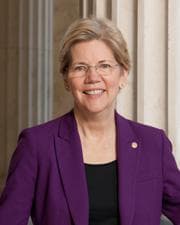
- Elizabeth Warren
- Cosponsors
- - 11 - 0
- Introduced
- In Committee
What this bill would do
This legislation, known as the EXPERTS Act of 2025, requires individuals and organizations to disclose specific conflicts of interest and funding sources when submitting scientific, economic, or technical studies during federal agency rulemaking processes. It establishes a new Office of the Public Advocate within the Office of Management and Budget to help the public participate in rulemaking and to conduct social equity assessments. The bill sets strict timelines for federal agencies to review regulations, mandates the publication of petition responses when a petition receives over 100,000 signatures, and penalizes public companies that submit false or misleading information. Additionally, it requires agencies to disclose inter-governmental rule changes and the justifications for withdrawing any proposed rules. Finally, the legislation permits federal agencies to reinstate certain previously disapproved rules either through a fast-track process or standard rulemaking procedures.
Yes· 3 of 12
Does this make what the government does easier for the public to see?+8
The bill significantly increases government transparency by requiring conflict-of-interest disclosures, justification for withdrawn rules, and public petition responses.
Does this give people more protection from unfair business practices?+6
The bill mandates strict conflict-of-interest disclosures and heavy penalties for false submissions by public companies, enhancing corporate accountability.
Does this narrow racial gaps in how people are treated?+5
The creation of the Office of the Public Advocate and mandatory social equity assessments help protect historically disadvantaged groups.
The opposite· 3 of 5
Would business owners be better off under this?-3
Adds heavy penalties for false information and strict disclosure burdens for technical or scientific studies submitted by interested parties.
Would high-income households be better off under this?-2
Imposes stricter disclosure rules and substantial penalties on corporate submissions, which may impact wealthy stakeholders and executives.
Would people with substantial wealth be better off under this?-2
Increased oversight and penalties on public companies and corporate studies can negatively affect high net-worth investors.
Who it would affect, and how
Potential Positive Impacts for People
-
Better Public Access and Assistance: Section 11 establishes the Office of the Public Advocate, which assists individuals in participating in the rulemaking process and helps populations that have not historically participated. This provision is positive because it ensures information is written in clear, accessible language and is available in multiple languages.
-
Transparency of Conflicts of Interest: Section 4 and Section 5 require interested persons submitting scientific, economic, or technical studies to disclose funding sources, sponsoring entities, and any financial relationships with affected parties. This is a positive outcome for the public because it uncovers hidden industry biases behind research used to shape federal rules.
-
Stronger Penalties for False Information: Section 10 imposes civil penalties of at least $250,000 for a first violation and at least $1,000,000 for subsequent violations on public companies that submit materially false, fraudulent, or misleading information to federal agencies. This protects the public from corporate deception in the regulatory process.
-
Direct Public Petitions: Section 15 requires agencies to provide a written response within 60 days to any public petition that receives more than 100,000 signatures. This gives everyday citizens a clear mechanism to hold officials accountable and ensures their voices are formally addressed.
-
Expanded Public Awareness: Section 14 requires agencies to notify interested persons within two business days of publishing a notice of proposed rulemaking or a final rule using provided contact information, agency websites, and social media. This keeps the public better informed about regulatory actions that affect them.
-
Potential Negative Impacts for People
-
Burden of Exclusions for Technical Submissions: Section 5 allows agencies to completely exclude from consideration or disregard any submission that violates disclosure rules regarding funding or conflicts of interest. While intended to enforce honesty, this could result in agencies discarding critical technical or scientific data simply due to paperwork errors or minor omissions, potentially harming the quality of the final rule.
- Potential Delays from Additional Assessments: Section 11 mandates that the Office of the Public Advocate perform a social equity assessment within 30 days when requested by an agency or the public. This extra layer of mandatory reporting could bog down the administrative process, leading to bureaucratic delays in implementing rules that the public may urgently need.
Groups and Interests Ranking
Every group the model scored this bill for, from -10 to +10. Hover a score for the reason it gave.
- Demographic And Interest Groups
- Good For African Americans+4Good For Hispanic Americans+4Good For Low Income Households+4Good For Asian Americans+3Good For Immigrants+3Good For Middle Class Households+3Good For Native Americans+3Good For Business Owners-3Good For Billionaires-2Good For High Income Households-2Good For High Net Worth Individuals-2Good For Ultra High Net Worth Individuals-2
- Governance And Ideology
- Improves Government Transparency+8Increases Federal Power+3
- Economy And Finance
- Improves Consumer Protection+6Improves Economic Growth+2
- Social Issues And Justice
- Improves Racial Equity+5
- 11/19/2025
- Read twice and referred to the Committee on Homeland Security and Governmental Affairs.
- 12 Cosponsors added.
- Introduced in Senate
One bill Congress.gov lists as related to this one — companions in the other chamber, earlier versions, and bills this one absorbed or was folded into.
 Richard Blumenthal
Democrat · Connecticut
 Cory Booker
Democrat · New Jersey
 Mazie Hirono
Democrat · Hawaii
 Andy Kim
Democrat · New Jersey
 Ben Luján
Democrat · New Mexico
 Edward Markey
Democrat · Massachusetts
 Jeff Merkley
Democrat · Oregon
 Bernie Sanders
Independent · Vermont
 Adam Schiff
Democrat · California
 Chris Van Hollen
Democrat · Maryland
 Ron Wyden
Democrat · Oregon
 Peter Welch
Democrat · Vermont