Bill · S. 3126· Senate(119-S-3126)
Fair Credit for Farmers Act of 2025
- Introduced
- 11/6/2025
- Last activity
- 11/6/2025 — Read twice and referred to the Committee on Agriculture, Nutrition, and Forestry.
- Sponsored by
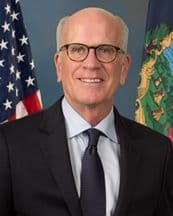
- Peter Welch
- Cosponsors
- - 2 - 0
- Introduced
- In Committee
What this bill would do
The Fair Credit for Farmers Act of 2025 aims to reform farm loans and the National Appeals Division process. It provides a two-year payment deferment and low interest rates for eligible distressed borrowers. The bill limits the use of principal residences as collateral and requires clearer explanations for loan denials. It also expands eligibility for direct loans and provides pathways for equitable relief when the government makes errors. Finally, it shifts the burden of proof to the agency during appeals for farmers earning under $300,000.
Yes· 3 of 27
Would farmers be better off under this?+10
The entire bill is designed to provide financial relief, better loan terms, and fairer appeals for farmers.
Would households on low incomes be better off under this?+8
Directly targets limited-resource and distressed borrowers with low interest rates and fee waivers.
Would people in rural areas be better off under this?+8
Directly supports the economic stability of rural farming operations.
The opposite
Does this reduce what the federal government owes?-2
Payment deferments and lower interest rates on government loans may reduce short-term federal revenue.
Does this make the government pay for what it commits to?-1
Deferring loan payments can be seen as a reduction in immediate fiscal recovery of government funds.
Who it would affect, and how
Potential Positive Impacts for People
- Financial Relief for Distressed Borrowers: Eligible borrowers can have principal and interest payments deferred for two years, with interest rates lowered to 0.125 percent (Sec. 2(b), 2(c)).
- Reduced Costs for Specific Producers: Covered producers, including veterans and socially disadvantaged farmers, can have guaranteed farm loan fees waived for at least two years (Sec. 2(d)).
- Protection of Home Ownership: The Secretary can only use a principal residence as collateral if other available assets are not adequate, and must release the residence once other assets cover 100 percent of the loan (Sec. 3(a)(c)).
- Improved Transparency in Denials: Applicants for loans or benefits will receive determination letters that describe the reasons for an adverse decision and cite the specific regulations used (Sec. 3(a)(b)).
- Easier Access for New Farmers: The one-year experience requirement for direct ownership loans can be waived for beginning farmers who have a mentor or acceptable education (Sec. 3(b)(1)).
- Fairer Appeals Process: For appellants with an adjusted gross income of $300,000 or less, the government agency must prove the adverse decision was not wrong, rather than the farmer proving it was (Sec. 4(a)).
- Compensation for Government Errors: Applicants may receive equitable relief if the Farm Service Agency erroneously denies a loan or benefit, leading to financial loss (Sec. 3(g)).
Potential Negative Impacts for People
- Limited Scope of Deferment: The payment deferment does not apply to any direct farm loan with a term of 12 months or less (Sec. 2(b)(2)).
- No Retroactive Relief: The provisions for equitable relief do not apply to applications, decisions, or communications made before the Act is enacted (Sec. 3(g)(2)).
Groups and Interests Ranking
Every group the model scored this bill for, from -10 to +10. Hover a score for the reason it gave.
- Demographic And Interest Groups
- Good For Farmers+10Good For Low Income Households+8Good For Rural Residents+8Good For Veterans+7Good For African Americans+6Good For Business Owners+6Good For Hispanic Americans+6Good For Native Americans+6Good For Young Adults+6Good For Asian Americans+5Good For Men+5Good For Middle Aged+5Good For Middle Class Households+5Good For Retirees+5Good For Seniors+5Good For White Americans+5Good For Women+5
- Social Issues And Justice
- Improves Affordable Housing+6Improves Racial Equity+5Improves Poverty Reduction+4Reduces Homelessness+3
- Governance And Ideology
- Improves Due Process+7Improves Government Transparency+6
- Economy And Finance
- Improves Small Business Support+8Improves Economic Growth+3Increases Job Creation+2Reduces National Debt-2Improves Fiscal Responsibility-1
- Environment Energy And Infrastructure
- Improves Rural Development+7
- 11/18/2025
- 1 Cosponsor added.
- 11/6/2025
- Read twice and referred to the Committee on Agriculture, Nutrition, and Forestry.
- 1 Cosponsor added.
- Introduced in Senate
One bill Congress.gov lists as related to this one — companions in the other chamber, earlier versions, and bills this one absorbed or was folded into.
 John Fetterman
Democrat · Pennsylvania
 Kirsten Gillibrand
Democrat · New York