Bill · S. 3044· Senate(119-S-3044)
Wildfire Emissions Prevention Act of 2025
- Introduced
- 10/23/2025
- Last activity
- 10/23/2025 — Read twice and referred to the Committee on Environment and Public Works.
- Sponsored by
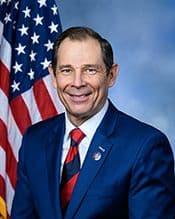
- John Curtis
- Cosponsors
- - 1 - 0
- Introduced
- In Committee
What this bill would do
The Wildfire Emissions Prevention Act of 2025 seeks to amend the Clean Air Act regarding how air quality monitoring data is handled. Specifically, it modifies the rules for air quality data influenced by both exceptional events and prescribed fires. The bill introduces a formal definition for "prescribed fire" as a planned ignition intended to meet specific objectives. It also requires the Administrator to publish revised regulations within a specific timeframe after enactment. These changes impact how State determinations regarding air quality are reviewed and processed.
Yes· 3 of 6
Does this better protect public land such as parks and forests?+6
It supports land managers in executing prescribed fires to prevent severe wildfires without undue air quality penalties.
Does this leave more decisions to the states?+6
The bill grants states primary authority to determine exceptional events under the Clean Air Act.
Does this better protect air, water and wildlife?+5
The bill facilitates prescribed burns for wildfire mitigation by updating air quality monitoring exemptions.
The opposite
No question was scored the opposite.
Who it would affect, and how
Potential Positive Impacts for People
-
Improved Handling of Prescribed Fires: The bill explicitly includes "prescribed fires" in the categories of events that affect air quality monitoring data (Section 2(a)(1)). This provides a specific framework for managing air quality data when fires are intentionally set to meet specific objectives.
-
Collaborative Analysis for Large-Scale Events: The Administrator is required to collaborate with multiple State, local, or Tribal authorities to develop demonstrations for regional, national, or international events when they impact multiple jurisdictions (Section 2(a)(5)). This could lead to more coordinated responses to large-scale air quality issues.
-
Streamlined Regulatory Process: The bill reduces the timeframe for finalizing revisions from 1 year to 180 days (Section 2(a)(2)(B)(b)(iii)), which may result in more timely regulatory updates regarding air quality monitoring.
Potential Negative Impacts for People
-
Changes to Air Quality Data Classifications: The bill modifies how events are classified, including the ability for the Administrator to review State determinations regarding "exceptional events or prescribed fires" (Section 2(a)(3)). This could lead to changes in how air quality compliance and exceedances are documented.
-
Risk of Reclassification: The Administrator's review process now includes oversight regarding the "designation, redesignation, classification, or reclassification of an area" and the "demonstration by a State of attainment of a national ambient air quality standard" (Section 2(a)(3)(4)(iii)). This could lead to shifts in how certain areas are classified in terms of air quality compliance.
Groups and Interests Ranking
Every group the model scored this bill for, from -10 to +10. Hover a score for the reason it gave.
- Environment Energy And Infrastructure
- Improves Public Land Management+6Improves Environmental Protections+5Improves Rural Development+5
- Demographic And Interest Groups
- Good For Rural Residents+5Good For Farmers+4
- Governance And Ideology
- Increase States Rights+6
- 10/23/2025
- Read twice and referred to the Committee on Environment and Public Works.
- 1 Cosponsor added.
- Introduced in Senate
- 9/10/2025
- Senate Committee on Environment and Public Works. Hearings held prior to introduction and/or referral. Hearings printed: S.Hrg. 119-343.
 Cynthia Lummis
Republican · Wyoming