Bill · S. 3029· Senate(119-S-3029)
DOE and NASA Interagency Research Coordination Act
- Introduced
- 10/22/2025
- Last activity
- 10/22/2025 — Read twice and referred to the Committee on Commerce, Science, and Transportation.
- Sponsored by
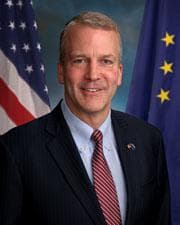
- Dan Sullivan
- Cosponsors
- - 0 - 1
- Introduced
- In Committee
What this bill would do
This bill is known as the DOE and NASA Interagency Research Coordination Act. It directs the Secretary of Energy and the Administrator of the National Aeronautics and Space Administration to work together on research and development activities. The agencies can use memoranda of understanding or other agreements to coordinate their work. They are authorized to focus on specific areas like propulsion systems, quantum information sciences, and wildfire mitigation. The bill also allows funds from other federal agencies to be transferred to NASA for specific research and education grants. Finally, the agencies must report to Congress on their coordination activities and the value of transferred funds.
Yes· 3 of 18
Does this put more money into scientific research?+6
The bill directly promotes interagency coordination, shared research infrastructure, and fund transfers for scientific and engineering research.
Does this put more into space exploration?+6
The legislation explicitly boosts coordination between DOE and NASA for space exploration, propulsion systems, and astrophysics.
Does this put more money into medical research?+5
The bill encourages interagency research coordination between the Department of Energy and NASA across numerous scientific domains.
The opposite
No question was scored the opposite.
Who it would affect, and how
Potential Positive Impacts for People
-
Advancements in Wildfire Mitigation: Under Section 2(c)(1)(I), the agencies may conduct collaborative research on wildfire mitigation and resilience methods. This could benefit people by reducing wildfire risks and the severity of damages to communities.
-
Improved Space Weather Forecasting: Under Section 2(c)(1)(J), the agencies can work on space weather forecasting and geomagnetic storm impact assessments. This is positive because it helps protect power grids, pipelines, communication systems, aviation, and satellite operations from disruptions.
-
STEM Workforce Training in Remote Regions: Under Section 2(c)(1)(L), the bill supports STEM workforce development and experiential training programs in underserved or remote regions like the Arctic. This helps local individuals gain valuable skills in aerospace engineering, Earth system modeling, and other relevant fields.
Potential Negative Impacts for People
- Potential for Bureaucratic Burdens and Oversight Delays: The text of the bill does not explicitly detail negative consequences or burdens for individuals or groups of people in the United States.
Groups and Interests Ranking
Every group the model scored this bill for, from -10 to +10. Hover a score for the reason it gave.
- Environment Energy And Infrastructure
- Improves Disaster Relief And F E M A+3Improves Environmental Protections+3Improves Rural Development+3Increases Renewable Energy Investment+3Improves Public Land Management+2
- Education And Technology
- Increases Scientific Research Funding+6Increases Space Exploration+6
- Demographic And Interest Groups
- Good For Rural Residents+3Good For Students+3Good For Young Adults+2Good For Children+1
- Economy And Finance
- Improves Economic Growth+2Increases Job Creation+2Improves Fiscal Responsibility+1
- Healthcare
- Increases Research Funding+5
- Governance And Ideology
- Improves Government Transparency+3Increases Federal Power+1
- National Security And Foreign Policy
- Improves Cybersecurity Defense+3
- 10/22/2025
- Read twice and referred to the Committee on Commerce, Science, and Transportation.
- 1 Cosponsor added.
- Introduced in Senate
 Adam Schiff
Democrat · California