Bill · S. 3006· Senate(119-S-3006)
Youth Prevention and Recovery Reauthorization Act of 2025
- Introduced
- 10/14/2025
- Last activity
- 10/14/2025 — Read twice and referred to the Committee on Health, Education, Labor, and Pensions.
- Sponsored by
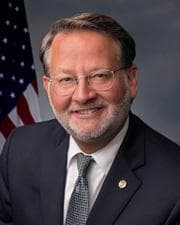
- Gary Peters
- Cosponsors
- None
- Introduced
- In Committee
What this bill would do
This bill, known as the "Youth Prevention and Recovery Reauthorization Act of 2025," aims to amend the SUPPORT for Patients and Communities Act. It focuses on reauthorizing the youth prevention and recovery initiative. The legislation updates definitions regarding secondary schools and clarifies terms for Indian Tribes and Tribal organizations. It also modifies language regarding specific populations at increased risk for substance misuse. Additionally, the bill adjusts the expiration date of certain provisions to 2028. Finally, it establishes a schedule for authorized appropriations through fiscal year 2030.
Yes· 3 of 7
Would children be better off under this?+6
The bill funds a youth prevention and recovery initiative through 2030.
Does this do more about addiction and overdose deaths?+6
The bill reauthorizes and funds the youth prevention and recovery initiative to address substance misuse risk.
Would people in their twenties and thirties be better off under this?+5
The expansion of the initiative to secondary schools and the focus on substance misuse risk impacts young people in those educational settings.
The opposite
No question was scored the opposite.
Who it would affect, and how
Potential Positive Impacts for People
-
Expanded Participation for Educational Entities: By adding "a consortium of local educational agencies" to the language in Section 2(1)(A)(i)(I), the bill allows for broader collaboration among local educational agencies.
-
Expanded Scope for Schools: The change from "high schools" to "secondary schools" in Section 2(1)(A)(i)(I) broadens the scope of the initiative to include all secondary schools as defined by the Elementary and Secondary Education Act of 1965.
-
Increased Focus on Substance Misuse Risk: Section 2(2)(A) replaces the phrase "and abuse" with "at increased risk for substance misuse," which shifts the focus toward identifying specific populations at higher risk.
-
Updated Support Terminology: In Section 2(3)(B), the term "peer mentoring" is replaced with "peer-to-peer support."
-
Long-term Sustainability Planning: Section 2(5)(A)(B) adds a requirement for a plan to sustain activities after the grant program has ended, which could help ensure the longevity of the initiatives.
-
Increased Funding Authorization: Section 2(7) authorizes specific annual appropriations starting at $10,000,000 for fiscal year 2026 and increasing each year up to $15,000,000 for fiscal year 2030.
Potential Negative Impacts for People
- No negative impacts or burdens are explicitly stated in the provided text.
Groups and Interests Ranking
Every group the model scored this bill for, from -10 to +10. Hover a score for the reason it gave.
- Demographic And Interest Groups
- Good For Children+6Good For Students+5Good For Young Adults+5Good For Native Americans+4
- Healthcare
- Improves Opioid Crisis Response+6
- Education And Technology
- Increases Public School Funding+4
- Social Issues And Justice
- Improves Racial Equity+3
- 10/14/2025
- Read twice and referred to the Committee on Health, Education, Labor, and Pensions.
- Introduced in Senate
4 bills Congress.gov lists as related to this one — companions in the other chamber, earlier versions, and bills this one absorbed or was folded into.