Bill · S. 295· Senate(119-S-295)
Reducing the Federal Workforce Through Attrition Act
- Introduced
- 1/29/2025
- Last activity
- 1/29/2025 — Read twice and referred to the Committee on Homeland Security and Governmental Affairs.
- Sponsored by
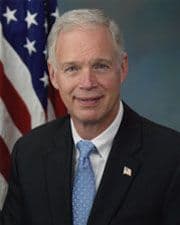
- Ron Johnson
- Cosponsors
- - 1 - 0
- Introduced
- In Committee
What this bill would do
The "Reducing the Federal Workforce Through Attrition Act" aims to decrease the total size of the Federal workforce. It requires that by fiscal year 2028, the number of Federal employees does not exceed 90 percent of the levels seen on September 30, 2025. To reach this goal, the bill implements a replacement rate where agencies can only hire one person for every three employees that leave. The Director of the Office of Management and Budget will monitor agencies to ensure they meet specific employee caps. If an agency exceeds its limit, it faces restrictions on hiring and certain employee approvals.
Yes· 3 of 5
Does this reduce what the federal government spends?+6
The bill mandates a 10 percent reduction in the total Federal workforce by fiscal year 2028.
Does this give the federal government more power?+5
The bill grants the Director of OMB and the President significant authority to set and monitor employee caps across all executive agencies.
Does this make the government pay for what it commits to?+5
The bill restricts the increase of service contracts unless they are proven to be a financial advantage to the government.
The opposite
Would union members be better off under this?-8
The bill restricts hiring and official time through mandates that are not subject to collective bargaining agreements.
Is this likely to create jobs?-7
The bill limits agency hiring to a replacement rate of only one new hire for every three departures.
Does this increase the pay, pensions or support veterans receive?-2
The reduction in workforce may impact the administration of veteran-related services if agencies exceed their caps.
Who it would affect, and how
Potential Positive Impacts for People
-
Workforce Reduction via Attrition: The bill aims to reduce the size of the Federal workforce through natural processes such as retirement or separation (Section 2(b) and 2(d)).
-
Cost-Effective Service Contracts: The act includes a rule that prevents increasing service contracts unless a cost comparison proves it is a financial advantage to the Government (Section 2(i)).
-
Emergency Flexibility: The President has the authority to waive workforce limits during a state of war, national security concerns, or extraordinary emergencies involving life, health, public safety, or property (Section 2(g)).
Potential Negative Impacts for People
-
Hiring Restrictions: If an agency exceeds its allowable number of employees, it is prohibited from appointing new individuals to fill vacancies (Section 2(f)(1)(B)(i)).
-
Limitations on Remote Work: Agencies that exceed their employee cap cannot appoint individuals to positions intended for remote work, nor can they approve existing employees to increase their remote work hours (Section 2(f)(1)(B)(ii-iii)).
-
Restrictions on Official Time: Agencies over their limit are prohibited from issuing approvals to increase the amount of official time authorized for a Federal employee (Section 2(f)(1)(B)(iv)).
-
Strict Replacement Limits: Between fiscal year 2026 and September 30, 2027, agencies are limited to hiring only one person for every three employees that depart (Section 2(d)).
Groups and Interests Ranking
Every group the model scored this bill for, from -10 to +10. Hover a score for the reason it gave.
- Governance And Ideology
- Increases Federal Power+5
- Economy And Finance
- Reduces Government Spending+6Improves Fiscal Responsibility+5Increases Job Creation-7
- Demographic And Interest Groups
- Good For Seniors+4Good For High Income Households+2Good For Union Workers-8
- National Security And Foreign Policy
- Improves Veterans Benefits-2
- 1/29/2025
- Read twice and referred to the Committee on Homeland Security and Governmental Affairs.
- 1 Cosponsor added.
- Introduced in Senate
 Rick Scott
Republican · Florida