Bill · S. 2928· Senate(119-S-2928)
H–1B and L–1 Visa Reform Act of 2025
- Introduced
- 9/29/2025
- Last activity
- 9/29/2025 — Read twice and referred to the Committee on the Judiciary.
- Sponsored by
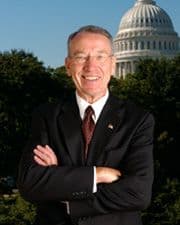
- Chuck Grassley
- Cosponsors
- - 1 - 2
- Introduced
- In Committee
What this bill would do
The H-1B and L-1 Visa Reform Act of 2025 aims to amend the Immigration and Nationality Act to reduce fraud and abuse in specific visa programs. The bill introduces stricter application and wage requirements for H-1B and L-1 nonimmigrants. It enhances the Department of Labor's authority to investigate employers and increases penalties for violations. Additionally, the legislation establishes new protections against the displacement of United States workers. The bill also modifies the allocation of H-1B visas and introduces new transparency requirements.
Yes· 3 of 5
Would union members be better off under this?+6
The bill protects U.S. workers from displacement and enforces higher wage standards.
Does this raise the lowest wage an employer may pay?+5
The bill requires H-1B and L-1 workers to be paid at least the highest of the local prevailing wage, the median wage, or the median wage for skill level 2.
Does this make what the government does easier for the public to see?+4
The bill enhances transparency by requiring employers to provide workers with specific information and copies of their petitions.
The opposite· 3 of 5
Would business owners be better off under this?-5
The bill increases administrative burdens, wage requirements, and the risk of high penalties for employers.
Would immigrants be better off under this?-4
The bill implements stricter degree requirements, limits stay durations, and increases employer oversight.
Does this make it easier to run a small business?-3
The bill imposes stricter application requirements, higher wage standards, and increased penalties on employers.
Who it would affect, and how
Potential Positive Impacts for People
-
Higher Wage Standards: Employers must pay H-1B workers wages that are at least the highest of the local prevailing wage, the median wage for the occupation, or the median wage for skill level 2. (Section 101)
-
Protection Against Job Displacement: The bill prohibits employers from displacing United States workers when using H-1B or L-1 nonimmigrants. (Section 101 and Section 201)
-
Increased Accountability through Penalties: Employers who violate working condition requirements or displace workers face significant fines and may be liable for lost wages and benefits to the harmed employees. (Section 112)
-
Enhanced Transparency for Workers: The bill requires employers to provide workers with specific information, including a brochure outlining their rights and a copy of their petition. (Section 122 and Section 123)
-
Protection Against Retaliation: The bill prohibits employers from taking adverse personnel actions or intimidating employees who disclose information regarding violations. (Section 112 and Section 207)
-
Improved Investigation Capabilities: The Secretary of Labor is authorized to hire up to 200 additional employees to oversee and enforce these programs. (Section 124)
Potential Negative Impacts for People
-
Stricter Degree Requirements: For a specialty occupation, the worker must have a bachelor's degree or higher directly related to the occupation or a specific license. (Section 106)
-
New Application Burdens: Employers may face new requirements, such as submitting IRS Form W-2 Wage and Tax Statements for previous H-1B employees. (Section 102)
-
Restrictions on Outplacement: L-1 workers with specialized knowledge may be restricted from being stationed primarily at the worksite of a different employer for more than one year without a waiver. (Section 201)
-
Limits on Stay Duration: The period of authorized admission for H-1B nonimmigrants may be limited to 3 years, with extensions allowed only under specific conditions. (Section 109)
-
New Requirements for New Offices: Employers opening new offices seeking L-1 workers must provide evidence of an adequate business plan, sufficient physical premises, and financial ability to conduct business. (Section 202)
Groups and Interests Ranking
Every group the model scored this bill for, from -10 to +10. Hover a score for the reason it gave.
- Governance And Ideology
- Improves Government Transparency+4
- Economy And Finance
- Increases Minimum Wage+5Improves Small Business Support-3
- Demographic And Interest Groups
- Good For Union Workers+6Good For Low Income Households+2Good For Business Owners-5Good For Immigrants-4
- Education And Technology
- Improves College Affordability-1
- Social Issues And Justice
- Improves Border Security+1Improves Pathway To Citizenship-2
- 9/29/2025
- Read twice and referred to the Committee on the Judiciary.
- 4 Cosponsors added.
- Introduced in Senate
 Richard Blumenthal
Democrat · Connecticut
 Richard Durbin
Democrat · Illinois
 Bernie Sanders
Independent · Vermont
 Tommy Tuberville
Republican · Alabama