Bill · S. 2734· Senate(119-S-2734)
9/11 Memorial and Museum Act
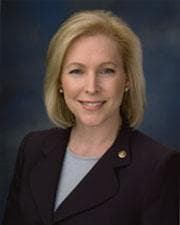
- Introduced
- 9/8/2025
- Last activity
- 9/8/2025 — Read twice and referred to the Committee on Homeland Security and Governmental Affairs.
- Sponsored by
- Kirsten Gillibrand
- Cosponsors
- - 1 - 1
- Introduced
- In Committee
What this bill would do
The 9/11 Memorial and Museum Act provides a one-time grant to the organization that operates the National September 11 Memorial & Museum. This grant is intended to fund the operation, security, and maintenance of the memorial and museum at the World Trade Center. The grant amount must be between $5,000,000 and $10,000,000. The Secretary of Homeland Security is responsible for reviewing applications and awarding the funds. To receive the grant, the entity must meet specific criteria regarding safety, education, and visitor access.
Yes· 3 of 6
Would households on low incomes be better off under this?+2
The bill incentivizes increasing access for economically disadvantaged visitors through free admission hours.
Would veterans be better off under this, taking everything together?+2
The bill provides free admission to the museum for active and retired members of the Armed Forces.
Does this make what the government does easier for the public to see?+2
The bill requires the entity's financial statements and expenditures to be made available to the public.
The opposite
Does this reduce what the federal government spends?-1
The bill authorizes a one-time grant of up to $10,000,000, which increases federal spending in the short term.
Who it would affect, and how
Potential Positive Impacts for People
-
Free admission for specific groups: The bill requires the entity to provide free admission to all facilities and museums associated with the memorial for active and retired members of the Armed Forces, registered first responders to the September 11, 2001 attacks, and family members of victims (Section 3, subsection (g)(1)(A)).
-
Free admission for the general public: The entity must provide dedicated free admission hours for the general public at least once a week (Section 3, subsection (g)(1)(B)).
-
Increased accessibility: The Secretary considers the entity's commitment to using funds to increase the numbers of economically disadvantaged visitors (Section 3, subsection (f)(4)).
-
Educational and preservation benefits: Funds are directed toward preserving the facilities and grounds and educating future generations (Section 3, subsection (f)(3)).
Potential Negative Impacts for People
- Financial oversight requirements: The entity receiving the grant must allow for annual Federal audits of financial statements, including revenues from ticket sales, donations, and grants, as well as expenditures on salaries and operations (Section 3, subsection (g)(2)).
Groups and Interests Ranking
Every group the model scored this bill for, from -10 to +10. Hover a score for the reason it gave.
- Demographic And Interest Groups
- Good For Low Income Households+2Good For Veterans+2
- Governance And Ideology
- Improves Government Transparency+2
- National Security And Foreign Policy
- Improves Veterans Benefits+2
- Economy And Finance
- Reduces Government Spending-1
- Education And Technology
- Improves School Choice+1
- Social Issues And Justice
- Improves Poverty Reduction+1
- 9/8/2025
- Read twice and referred to the Committee on Homeland Security and Governmental Affairs.
- 2 Cosponsors added.
- Introduced in Senate
One bill Congress.gov lists as related to this one — companions in the other chamber, earlier versions, and bills this one absorbed or was folded into.
 David McCormick
Republican · Pennsylvania
 Charles Schumer
Democrat · New York