Bill · S. 2505· Senate(119-S-2505)
Primacy Certainty Act of 2025
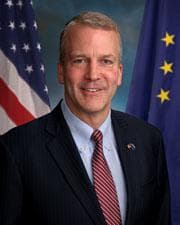
- Introduced
- 7/29/2025
- Last activity
- 7/29/2025 — Read twice and referred to the Committee on Environment and Public Works.
- Sponsored by
- Dan Sullivan
- Cosponsors
- - 2 - 0
- Introduced
- In Committee
What this bill would do
The bill, known as the Primacy Certainty Act of 2025, amends the Safe Drinking Water Act to establish clearer timelines and rules for deciding on State underground injection control programs for Class VI wells. It requires the Administrator to respond to a State application within 180 days and provide detailed explanations or specific lists of deficiencies if a decision is delayed. If the Administrator fails to act within a specific 30-day window following that period, the State program application is automatically approved under certain conditions. The legislation also establishes a 10-day deadline for the Administrator to determine if an application is complete, failing which it can be considered administratively complete upon State request. Finally, the bill requires the designation of a specific coordinator for each State and mandates a resource evaluation report regarding staff and funding availability.
Yes· 3 of 4
Does this leave more decisions to the states?+6
The legislation significantly enhances state authority and certainty in gaining primary enforcement responsibility over Class VI wells.
Does this make what the government does easier for the public to see?+3
The bill mandates detailed explanations and specific lists of deficiencies from the EPA when application decisions are delayed.
Would business owners be better off under this?+3
Streamlining injection well permitting can benefit industries and project developers relying on carbon capture and storage technologies.
The opposite
Does this give the federal government more power?-2
The bill imposes strict deadlines and automatic approval mechanisms that limit the administrative flexibility of federal agencies.
Does this better protect air, water and wildlife?-1
The inclusion of strict automatic approval timelines for state primacy programs could potentially bypass thorough federal oversight of drinking water protections.
Who it would affect, and how
Potential Positive Impacts for People
-
States seeking primary enforcement responsibility for Class VI wells benefit from a clear 180-day deadline for a decision from the Administrator, as outlined in Section 2(a) inserting section 1422(b)(2)(C)(i). This ensures accountability and prevents applications from sitting indefinitely without explanation.
-
States submitting an application or notice are given a fast 10-day deadline for the Administrator to determine completeness, with a backup provision that considers the application administratively complete upon request if the deadline is missed, according to Section 2(a) inserting section 1422(b)(2)(C)(ii)(II). This speeds up the administrative process for local governments.
-
States are provided with dedicated coordination and staff support because the Administrator must designate one individual responsible for coordinating pre-application activities, application reviews, and hiring additional staff for each State, as detailed in Section 2(a) inserting section 1422(b)(6). This helps ensure smoother communication and resource allocation for local officials.
Potential Negative Impacts for People
- The Administrator faces strict automatic approval penalties if decisions are not made within the designated timeframes, potentially forcing the approval of State programs (Section 2(a) inserting section 1422(b)(2)(C)(ii)(I)) before federal oversight is fully satisfied, which could burden public safety if drinking water protections are overlooked.
Groups and Interests Ranking
Every group the model scored this bill for, from -10 to +10. Hover a score for the reason it gave.
- Governance And Ideology
- Increase States Rights+6Improves Government Transparency+3Increases Federal Power-2
- Demographic And Interest Groups
- Good For Business Owners+3
- Environment Energy And Infrastructure
- Reduces Carbon Emissions+2Improves Environmental Protections-1
- 4/28/2026
- 1 Cosponsor added.
- 7/29/2025
- Read twice and referred to the Committee on Environment and Public Works.
- 1 Cosponsor added.
- Introduced in Senate
One bill Congress.gov lists as related to this one — companions in the other chamber, earlier versions, and bills this one absorbed or was folded into.
 David McCormick
Republican · Pennsylvania
 Pete Ricketts
Republican · Nebraska