 Bill · S. 2335· Senate(119-S-2335)
Pensions for All Act
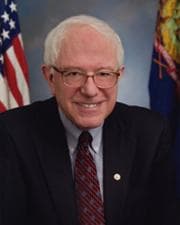
- Introduced
- 7/17/2025
- Last activity
- 7/17/2025 — Read twice and referred to the Committee on Finance.
- Sponsored by
- Bernie Sanders
- Cosponsors
- None
- Introduced
- In Committee
What this bill would do
The "Pensions for All Act" requires every employer to provide employees with a retirement program that has benefits comparable to the Federal Employees Retirement System (FERS) or allow them to participate in FERS. This mandate extends to self-employed individuals, who must either enroll in a covered retirement program or participate in FERS. Employers and the self-employed are given the option to switch between these options at least once a year. The bill amends existing laws to allow non-federal employees and the self-employed to participate in FERS, including contributions to the Thrift Savings Plan. It also establishes tax credits for small employers and certain self-employed individuals to assist with pension contributions. Finally, the Act imposes a daily tax on employers or self-employed individuals who fail to maintain these required programs.
Yes· 3 of 6
Would retired people be better off under this?+8
The bill expands access to stable, FERS-equivalent retirement benefits for all workers.
Would people over 65 be better off under this?+7
The bill establishes mandatory retirement benefits for all employees and the self-employed.
Would middle-income households be better off under this?+6
It creates a structured pathway to retirement security through employer-mandated contributions.
The opposite
Would business owners be better off under this?-5
The bill imposes new contribution requirements and daily penalties for non-compliance on employers.
Who it would affect, and how
Potential Positive Impacts for People
-
Retirement Security Options: Employers must make available a covered retirement program or allow employees to participate in FERS, providing a baseline of retirement benefits (Section 3(a)).
-
Flexibility for Changes: Employers and self-employed individuals have the option to switch between a covered retirement program and FERS at least once a year (Section 3(b)).
-
Tax Relief for Small Entities: An eligible taxpayer, including certain employers and self-employed individuals, may receive a tax credit for qualified pension contributions (Section 5(a)).
-
Protection of Current Wages: Employers are prohibited from reducing any form of compensation provided to an employee because of the new retirement requirements (Section 7).
Potential Negative Impacts for People
-
Financial Burdens on Employers: Employers are required to make contributions to retirement funds, with certain contribution amounts increasing based on annual revenue (Section 4(f)).
-
Financial Burdens on Self-Employed Individuals: Self-employed individuals are required to participate in a covered retirement program or FERS and must make specific contributions (Section 3(a) and Section s 4(f)).
-
Penalties for Non-compliance: A tax of $10 per day (adjusted for inflation) is imposed on employers or self-employed individuals who fail to provide a required retirement program or make required contributions (Section 6(b)).
-
Reduced Contribution Amounts for Certain Groups: Contribution amounts for employers and the self-employed may be subject to specific reductions or adjustments based on revenue or pay levels (Section 4(f)).
Groups and Interests Ranking
Every group the model scored this bill for, from -10 to +10. Hover a score for the reason it gave.
- Demographic And Interest Groups
- Good For Retirees+8Good For Seniors+7Good For Middle Class Households+6Good For Low Income Households+5Good For Business Owners-5
- Economy And Finance
- Reduces Small Business Taxes+5Improves Small Business Support+4
- 7/17/2025
- Read twice and referred to the Committee on Finance.
- Introduced in Senate
One bill Congress.gov lists as related to this one — companions in the other chamber, earlier versions, and bills this one absorbed or was folded into.