Bill · S. 2326· Senate(119-S-2326)
Payment Choice Act of 2025
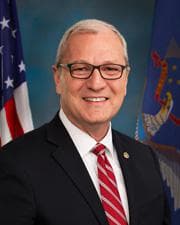
- Introduced
- 7/17/2025
- Last activity
- 7/17/2025 — Read twice and referred to the Committee on Banking, Housing, and Urban Affairs.
- Sponsored by
- Kevin Cramer
- Cosponsors
- - 0 - 1
- Introduced
- In Committee
What this bill would do
The Payment Choice Act of 2025 aims to ensure United States currency is accepted as payment at brick-and-mortar retail businesses. It requires any person selling goods or services at a physical location to accept cash for transactions up to $500. Additionally, these businesses are prohibited from charging cash-paying customers higher prices than those paying by other methods. The bill provides specific exceptions for sale system failures or insufficient cash on hand. It also outlines enforcement mechanisms, including civil actions and penalties for violators.
Yes· 3 of 4
Does this give people more protection from unfair business practices?+6
The bill protects consumers by ensuring they can use cash and prevents price discrimination based on payment method.
Would households on low incomes be better off under this?+5
The bill ensures access to cash payments which is beneficial for those who are unbanked or cash-reliant.
Would middle-income households be better off under this?+3
Ensuring payment choices can provide convenience and prevent price premiums for cash users.
The opposite
Would business owners be better off under this?-4
The bill imposes mandates on accepting cash and potential legal/financial penalties for non-compliance.
Does this make it easier to run a small business?-3
The bill imposes potential financial burdens and legal liabilities on retail businesses.
Who it would affect, and how
Potential Positive Impacts for People
-
Guaranteed Payment Method: Consumers will have the right to use cash at retail businesses that accept in-person payments (Section 3(a)(1)).
-
Price Fairness: Retailers are prohibited from charging cash-paying customers a higher price compared to customers not using cash (Section 3(a)(2)).
-
Consumer Protections and Recourse: Aggrieved customers may seek preventative relief, such as injunctions, or pursue civil actions for actual or liquidated damages if a retailer violates these rules (Section 3(d)(1) and 3(d)(2)).
-
Legal Support: Courts have the discretion to appoint a court-paid attorney for individuals and may award reasonable attorney's fees to prevailing parties (Section 3(d)(5) and 3(d)(6)).
Potential Negative Impacts for People
-
Transaction Limits on Large Bills: For a five-year period, businesses are not required to accept cash payments in $50 bills or any larger bill (Section 3(c)(1)).
-
Inactivity Fees on Prepaid Cards: If a business uses the exception of providing a cash-to-prepaid card device, they may charge an inactivity fee if there has been no activity on the card for 12 months (Section 3(b)(2)).
-
Potential Financial Burdens for Businesses: Retailers who violate the law may be held liable for actual damages, liquidated damages of $250, and civil penalties of up to $1,500 for subsequent offenses (Section 3(d)(2)).
Groups and Interests Ranking
Every group the model scored this bill for, from -10 to +10. Hover a score for the reason it gave.
- Demographic And Interest Groups
- Good For Low Income Households+5Good For Middle Class Households+3Good For Business Owners-4
- Economy And Finance
- Improves Consumer Protection+6Improves Small Business Support-3
- Governance And Ideology
- Increases Federal Power+3
- 7/17/2025
- Read twice and referred to the Committee on Banking, Housing, and Urban Affairs.
- 1 Cosponsor added.
- Introduced in Senate
 John Fetterman
Democrat · Pennsylvania