Bill · S. 2267· Senate(119-S-2267)
Ensuring Workers Get PAID Act of 2025
- Introduced
- 7/14/2025
- Last activity
- 7/14/2025 — Read twice and referred to the Committee on Health, Education, Labor, and Pensions.
- Sponsored by
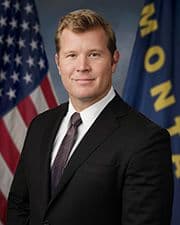
- Tim Sheehy
- Cosponsors
- - 2 - 0
- Introduced
- In Committee
What this bill would do
This bill, titled the "Ensuring Workers Get PAID Act of 2025," seeks to establish the Payroll Audit Independent Determination program within the Department of Labor. The program is designed to foster collaboration with employers who have inadvertently violated the Fair Labor Standards Act of 1938. It allows employers to conduct voluntary self-audits to identify and remedy unpaid minimum wages or overtime compensation owed to affected employees. Once an application is approved by the Administrator, employers can settle these debts directly with employees through a formal process. The program aims to resolve wage inaccuracies within the statute of limitations through a supervised settlement system.
Yes· 3 of 8
Does this raise the lowest wage an employer may pay?+5
The bill facilitates the recovery of unpaid minimum wages and overtime through a supervised self-audit process.
Would households on low incomes be better off under this?+5
Increases the efficiency of receiving back wages for unpaid minimum wage and overtime.
Would business owners be better off under this?+4
Allows employers to resolve wage inaccuracies through a voluntary, non-litigious supervised system.
The opposite
Would immigrants be better off under this?-3
The bill explicitly excludes certain visa-holding employees from the program's benefits.
Who it would affect, and how
Potential Positive Impacts for People
-
Efficient Recovery of Back Wages: The program allows employers to remedy unintentional violations of the Fair Labor Standards Act of 1938, which can result in employees receiving unpaid minimum wages or overtime compensation (Section 4(a)).
-
Access to Compliance Resources: The Administrator is required to provide employers with resources and assistance regarding wage and hour requirements via online, printed, and outreach methods (Section 4(b)(2)(1)).
-
Employee Choice in Settlements: Affected employees have the right to either accept or decline an offer of settlement, which allows them to preserve their private right of action to recover unpaid wages (Section 4(d)(1)(B)(ii) and Section 4(d)(2)(A)).
-
Protection Against Retaliation: The bill amends the Fair Labor Standards Act to ensure that employees who have accepted or declined a settlement offer under this program are protected from retaliation (Section 4(f)).
Potential Negative Impacts for People
-
Waiver of Legal Rights: If an employee accepts a settlement offer through the program, they waive their private right of action to recover unpaid minimum wages or overtime compensation, including any liquidated damages (Section 4(d)(2)(B)).
-
Exclusion of Certain Workers: The term "affected employee" excludes any employee subject to prevailing wage requirements under the H-1B, H-2B, or H-2A visa programs, the Davis-Bacon Act, or the Service Contract Act (Section 3(1)).
-
Limited Scope of Investigation: The Administrator is prohibited from expanding the scope of investigated violations beyond what the employer identified in their application, which may prevent the discovery of other potential violations (Section 4(e)(2)).
Groups and Interests Ranking
Every group the model scored this bill for, from -10 to +10. Hover a score for the reason it gave.
- Economy And Finance
- Increases Minimum Wage+5Improves Small Business Support+3
- Demographic And Interest Groups
- Good For Low Income Households+5Good For Business Owners+4Good For Immigrants-3
- Governance And Ideology
- Improves Due Process+2Improves Government Transparency+2Increases Federal Power+2
- Social Issues And Justice
- Improves Poverty Reduction+3
- 7/14/2025
- Read twice and referred to the Committee on Health, Education, Labor, and Pensions.
- 2 Cosponsors added.
- Introduced in Senate
One bill Congress.gov lists as related to this one — companions in the other chamber, earlier versions, and bills this one absorbed or was folded into.
 Marsha Blackburn
Republican · Tennessee
 Ted Budd
Republican · North Carolina