Bill · S. 2247· Senate(119-S-2247)
Disaster Assistance Improvement and Decentralization Act
- Introduced
- 7/10/2025
- Last activity
- 7/10/2025 — Read twice and referred to the Committee on Finance. (Sponsor introductory remarks on measure: CR S4316-4317)
- Sponsored by
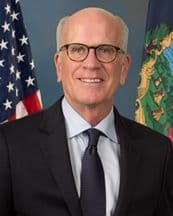
- Peter Welch
- Cosponsors
- None
- Introduced
- In Committee
What this bill would do
The Disaster Assistance Improvement and Decentralization Act aims to increase local control and expand capacity for disaster response and recovery. It seeks to provide stable Federal funding streams for communities impacted by disasters. The bill includes provisions to increase funding for State hazard mitigation offices and adjusts grant scales for low-capacity jurisdictions. It also introduces advance assistance and technical assistance pilot programs to support local governments. Additionally, the act implements simplified procedures for certain eligible projects and regulates how management costs are awarded.
Yes· 3 of 4
Does this improve help for people hit by a disaster?+8
The bill significantly expands funding, advance assistance, and technical support for disaster response and recovery.
Does this leave more decisions to the states?+5
The bill emphasizes increasing local control and capacity for state and tribal governments in disaster management.
Would Native Americans be better off under this?+5
The bill provides direct support and funding opportunities for Indian tribal governments.
The opposite
No question was scored the opposite.
Who it would affect, and how
Potential Positive Impacts for People
-
Increased Funding for State Mitigation: The President may award financial assistance to States and Indian tribal governments to fund State hazard mitigation offices, with amounts being at least 1 percent of total financial assistance (Section 101).
-
Support for Low-Capacity Jurisdictions: The President may increase the percentage contributed towards hazard mitigation measures to up to 85 percent for jurisdictions facing structural barriers like limited staffing or fiscal resources (Section s 102, Section 2).
-
Improved Disaster Recovery Speed: The bill allows for more advance assistance, increasing the percentage from 25 percent to 50 percent for hazard mitigation (Section 103).
-
Local Training Opportunities: Upon request, the President shall conduct intensive training for jurisdictions to explain the process of receiving resources, financial assistance, and required documentation (Section 202).
-
Financial Relief via Advance Assistance: For certain projects, the President may provide up to 75 percent of the estimated cost before costs are even incurred (Section 202).
-
Technical Assistance for Local Planning: The Administrator may establish a program to assign FEMA employees to provide technical assistance or fund additional employees to help low-capacity jurisdictions with project scoping and damage documentation (Section 203).
-
Simplified Project Procedures: The bill establishes a process where the President may make contributions based on the actual costs incurred for certain eligible projects (Section 204).
-
Critical Facility Restoration: The Administrator shall approve funding to restore critical facilities, such as those providing power, water, or medical care, at a new location if they sustain significant damage (Section 301).
-
Tax Relief for Disaster Workers: Federal disaster relief workers traveling on behalf of the United States in temporary duty status for more than a year may be eligible for a deduction for traveling expenses (Section 304).
Potential Negative Impacts for People
-
Increased Financial Burdens for Small Jurisdictions: While not explicitly labeled as a burden, the bill requires grantees receiving advance assistance to provide a methodology to ensure safeguards against waste, fraud, and abuse (Section 202).
-
Risk of Cost Overruns: Under the simplified procedures, the ability to receive contributions may not apply if the cost of a project exceeds the estimate due to poor management, fraud, or waste (Section 204).
Groups and Interests Ranking
Every group the model scored this bill for, from -10 to +10. Hover a score for the reason it gave.
- Environment Energy And Infrastructure
- Improves Disaster Relief And F E M A+8
- Governance And Ideology
- Increase States Rights+5Improves Government Transparency+3
- Demographic And Interest Groups
- Good For Native Americans+5
- 7/10/2025
- Read twice and referred to the Committee on Finance. (Sponsor introductory remarks on measure: CR S4316-4317)
- Introduced in Senate