Bill · S. 1978· Senate(119-S-1978)
Defense Technology Hubs Act of 2025
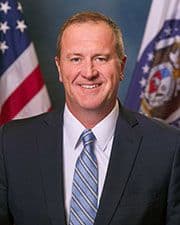
- Introduced
- 6/5/2025
- Last activity
- 6/5/2025 — Read twice and referred to the Committee on Armed Services.
- Sponsored by
- Eric Schmitt
- Cosponsors
- - 0 - 2
- Introduced
- In Committee
What this bill would do
The Defense Technology Hubs Act of 2025 requires the Secretary of Defense to create a network of regional hubs to advance defense-related technologies. These hubs are intended to foster innovation, collaboration, and the rapid development of technologies critical to national security. The program will solicit applications from eligible consortia, which include universities, small businesses, and local governments. The Secretary aims to designate at least 10 hubs across diverse geographic regions within three years. The program also includes provisions for grants to support research, prototyping, and administrative costs. Ultimately, the act seeks to enhance national security by attracting talent and building a skilled workforce.
Yes· 3 of 10
Does this put more money into scientific research?+6
The act authorizes $375 million to accelerate research into emerging technologies like AI and quantum computing.
Would business owners be better off under this?+5
The bill creates opportunities for small businesses and defense contractors through grants and partnerships.
Is this likely to create jobs?+5
The bill promotes workforce development and training programs to build a skilled pipeline for defense innovation.
The opposite
Does this make patent and copyright rules fairer?-2
The bill includes provisions for the Department of Defense to retain necessary rights over developed intellectual property.
Who it would affect, and how
Potential Positive Impacts for People
-
Workforce Development and Training: The bill aims to promote training programs through partnerships with community colleges, research universities, and vocational programs to build a skilled pipeline for defense innovation (Section 4(c)(4)).
-
Economic and Workforce Development: The selection criteria for these hubs include the potential for economic and workforce development impact (Section 4(b)(3)(F)).
-
Regional Economic Strengths: The program is designed to address regional needs by leveraging local expertise, infrastructure, and economic strengths (Section 4(c)(3)).
-
Innovation and Technology Advancement: The hubs are intended to accelerate the development of technologies such as artificial intelligence, quantum technologies, hypersonics, biotechnology, and advanced manufacturing (Section 4(c)(1)).
Potential Negative Impacts for People
-
Security and Compliance Burdens: Each hub must implement strict cybersecurity measures, comply with International Traffic in Arms Regulations (ITAR) and Export Administration Regulations (EAR), and prevent participation by foreign entities of concern (Section 4(e)(1)).
-
Intellectual Property Restrictions: The Secretary will develop guidelines for intellectual property that include provisions for the Department to retain necessary rights for defense applications (Section 4(f)(2)).
Groups and Interests Ranking
Every group the model scored this bill for, from -10 to +10. Hover a score for the reason it gave.
- Demographic And Interest Groups
- Good For Business Owners+5Good For Students+4Good For Young Adults+3
- Economy And Finance
- Increases Job Creation+5Improves Economic Growth+4Improves Small Business Support+3
- Governance And Ideology
- Increases Federal Power+3Improves Government Transparency+2
- National Security And Foreign Policy
- Improves Cybersecurity Defense+5
- Education And Technology
- Increases Scientific Research Funding+6Improves Intellectual Property Fairness-2
- 10/27/2025
- 1 Cosponsor added.
- 6/5/2025
- Read twice and referred to the Committee on Armed Services.
- 1 Cosponsor added.
- Introduced in Senate
 John Hickenlooper
Democrat · Colorado
 Raphael Warnock
Democrat · Georgia