 Bill · S. 1818· Senate(119-S-1818)
Prescription Drug Price Relief Act of 2025
- Introduced
- 5/20/2025
- Last activity
- 5/20/2025 — Read twice and referred to the Committee on Health, Education, Labor, and Pensions.
- Sponsored by
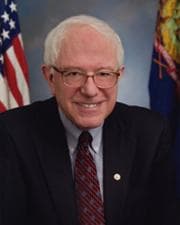
- Bernie Sanders
- Cosponsors
- - 0 - 7
- Introduced
- In Committee
What this bill would do
The Prescription Drug Price Relief Act of 2025 aims to significantly lower prescription drug prices for patients in the United States. It establishes a process for the Secretary of Health and Human Services to identify brand name drugs with excessive prices. A drug may be deemed excessively priced if its domestic average manufacturing price exceeds the median price in five reference countries: Canada, the United Kingdom, Germany, France, and Japan. For drugs not meeting that specific criteria, the Secretary can determine if a price is excessive based on various other factors like patient population and drug value. Once a drug is identified as excessively priced, the Secretary can waive government-granted exclusivities and grant open, non-exclusive licenses to allow others to produce or import the drug. This mechanism is intended to end government-granted monopolies for manufacturers charging high prices.
Yes· 3 of 9
Does this lower the price of prescription medicines?+10
The bill's central purpose is to significantly lower the costs of prescription drugs by ending brand-name monopolies.
Would people over 65 be better off under this?+8
Lower drug prices provide significant financial relief to seniors who often rely on prescription medications.
Would households on low incomes be better off under this?+8
Reducing drug prices directly improves the purchasing power of low-income households.
The opposite
Does this make patent and copyright rules fairer?-6
The bill reduces traditional intellectual property protections by waiving exclusivities for certain drugs.
Would business owners be better off under this?-5
Pharmaceutical manufacturers and business owners face new regulatory burdens and potential loss of monopoly profits.
Who it would affect, and how
Potential Positive Impacts for People
-
Lower Prescription Drug Prices: The primary goal of the act is to significantly lower drug prices for patients by ending monopolies held by manufacturers who charge prices higher than the median in other countries (Section 2 and Section s 3).
-
Increased Competition: By granting open, non-exclusive licenses, the bill allows any person to make, use, sell, or import the drug, which can increase the availability of generic or biosimilar versions (Section 3(a)(2)).
-
Faster Access to Alternatives: The Secretary is required to prioritize and act within 8 months of the submission of generic or biosimilar drug applications for drugs subject to these licenses (Section 3(b)).
-
Affordability Protections: The bill requires that any entity accepting a license must sell the drug at a price below the excessive price determination, ensuring the new products remain affordable (Section 4(a)(3)).
-
Public Accountability: The Secretary must maintain a comprehensive database of excessively priced drugs and their determinations, making this information available to the public (Section 5(a)).
Potential Negative Impacts for People
-
Potential for Civil Actions against Manufacturers: The Secretary is authorized to file civil actions against manufacturers who increase the price of a drug after an excessive price determination has been made, seeking to recover damages (Section 3(c)).
-
Financial Obligations for Licensees: Entities that accept an open, non-exclusive license are required to pay a reasonable royalty to the original patent holder (Section 4(a)(1)).
-
Manufacturer Reporting Burdens: Manufacturers are required to submit detailed annual reports including research and development costs, marketing expenditures, and pricing data (Section 6(a)).
-
Penalties for Non-Reporting: Manufacturers that fail to submit required information on time or provide false information may be subject to civil monetary penalties (Section 6(c)).
Groups and Interests Ranking
Every group the model scored this bill for, from -10 to +10. Hover a score for the reason it gave.
- Demographic And Interest Groups
- Good For Low Income Households+8Good For Retirees+8Good For Seniors+8Good For Business Owners-5
- Healthcare
- Reduces Prescription Drug Costs+10Improves Healthcare Access+7
- Governance And Ideology
- Increases Federal Power+7Improves Government Transparency+6
- Economy And Finance
- Improves Consumer Protection+8
- Education And Technology
- Improves Intellectual Property Fairness-6
- Social Issues And Justice
- Improves Poverty Reduction+5
- 6/17/2025
- 1 Cosponsor added.
- 5/20/2025
- Read twice and referred to the Committee on Health, Education, Labor, and Pensions.
- 6 Cosponsors added.
- Introduced in Senate
One bill Congress.gov lists as related to this one — companions in the other chamber, earlier versions, and bills this one absorbed or was folded into.
 Richard Blumenthal
Democrat · Connecticut
 Cory Booker
Democrat · New Jersey
 Christopher Murphy
Democrat · Connecticut
 Jeff Merkley
Democrat · Oregon
 Peter Welch
Democrat · Vermont
 Sheldon Whitehouse
Democrat · Rhode Island
 Elizabeth Warren
Democrat · Massachusetts