Bill · S. 1769· Senate(119-S-1769)
Farmer to Farmer Education Act of 2025
- Introduced
- 5/14/2025
- Last activity
- 5/14/2025 — Read twice and referred to the Committee on Agriculture, Nutrition, and Forestry.
- Sponsored by
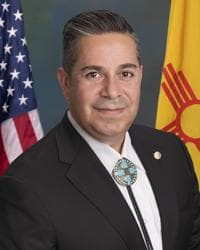
- Ben Luján
- Cosponsors
- - 0 - 1
- Introduced
- In Committee
What this bill would do
The Farmer to Farmer Education Act of 2025 aims to amend the Food Security Act of 1985 to expand farmer-led technical assistance. The bill establishes a "farmer-to-farmer network" definition for associations that share information and support. It authorizes the Secretary to enter into cooperative agreements with various entities to build capacity for these networks. These networks are intended to connect farmers with mentors and group learning opportunities to increase the adoption of science-based conservation practices. The bill also allows for subawards to support events and activities that build network capacity. Finally, it establishes reporting requirements to ensure accountability for the activities funded under this subsection.
Yes· 3 of 17
Would farmers be better off under this?+7
Provides significant technical assistance, mentorship, and resource access for various farming models.
Would people in rural areas be better off under this?+5
Supports rural land users through farmer-to-farmer networks.
Does this invest in rural communities?+5
Provides technical assistance and networks specifically for farmers and forest owners.
The opposite
No question was scored the opposite.
Who it would affect, and how
Potential Positive Impacts for People
-
Increased Access to Technical Assistance: The bill aims to increase technical assistance that meets the specific needs of, and is accessible to, farmers, ranchers, and forest owners using various models and scales (Section 2, subsection (j)(1)(B)).
-
Support for Conservation Goals: The provision of assistance is intended to help farmers, ranchers, and forest owners adopt consistent, science-based, site-specific practices to achieve conservation objectives (Section 2, subsection (j)(1)(A)).
-
Priority for Underserved Groups: The Secretary is directed to give priority to entities that serve historically underserved farmers, ranchers, and forest owners, as well as those operating in high-poverty areas (Section 2, subsection (j)(2)(C)).
-
Language Accessibility: To assist non-English speaking farmers, ranchers, or forest owners, eligible entities are required to provide assistance in the individual's native language to the greatest extent practicable (Section 2, subsection (j)(3)(B)).
-
Mentorship and Skill Building: The bill facilitates connections between mentors and mentees, as well as training to build skills for network leaders and participants (Section 2, subsection (j)(3)(A)).
Potential Negative Impacts for People
- No specific negative impacts or burdens are explicitly mentioned in the provided text.
Groups and Interests Ranking
Every group the model scored this bill for, from -10 to +10. Hover a score for the reason it gave.
- Demographic And Interest Groups
- Good For Farmers+7Good For Rural Residents+5Good For Hispanic Americans+4Good For Native Americans+4Good For African Americans+3Good For Business Owners+3Good For Low Income Households+2
- Environment Energy And Infrastructure
- Improves Rural Development+5Improves Environmental Protections+4Improves Public Land Management+3Reduces Carbon Emissions+3
- Social Issues And Justice
- Improves Racial Equity+4Improves Poverty Reduction+2
- Economy And Finance
- Improves Small Business Support+3
- Governance And Ideology
- Improves Government Transparency+2Increases Federal Power+1
- Education And Technology
- Increases Scientific Research Funding+2
- 5/14/2025
- Read twice and referred to the Committee on Agriculture, Nutrition, and Forestry.
- 1 Cosponsor added.
- Introduced in Senate
2 bills Congress.gov lists as related to this one — companions in the other chamber, earlier versions, and bills this one absorbed or was folded into.
 Jerry Moran
Republican · Kansas