Bill · S. 1765· Senate(119-S-1765)
Connecticut River Watershed Partnership Act
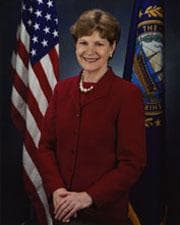
- Introduced
- 5/14/2025
- Last activity
- 5/14/2025 — Read twice and referred to the Committee on Environment and Public Works.
- Sponsored by
- Jeanne Shaheen
- Cosponsors
- - 6 - 0
- Introduced
- In Committee
What this bill would do
The Connecticut River Watershed Partnership Act directs efforts to restore and protect the 5-state Connecticut River Watershed region. It establishes a nonregulatory program managed by the Secretary of the Interior to coordinate conservation activities among various government and community entities. Additionally, the bill creates a voluntary grant and technical assistance program to fund these restoration and protection projects. The program aims to manage fish, wildlife, and plant populations while improving water quality and public access. It also focuses on community resilience, farmland conservation, and the promotion of traditional Tribal practices. The Act authorizes various sums of money for these efforts from fiscal years 2026 through 2030.
Yes· 3 of 14
Does this better protect air, water and wildlife?+8
The bill establishes a comprehensive program to restore and protect the Connecticut River Watershed.
Would Native Americans be better off under this?+7
The bill promotes traditional Tribal cultural practices and ecological knowledge.
Does this better protect public land such as parks and forests?+6
The act directs the management and protection of lands and water within the watershed.
The opposite
No question was scored the opposite.
Who it would affect, and how
Potential Positive Impacts for People
-
Environmental and Recreational Benefits: The program aims to restore fish, wildlife, and plant populations, improve water quality, and enhance opportunities for public access and recreation, such as hunting, fishing, and wildlife viewing (Section 3(d)).
-
Community Resilience: The act promotes the use of nature-based solutions to maximize the resilience of communities and natural systems against changing sea levels and storm risks (Section 3(d)).
-
Improved Infrastructure and Access: There is a focus on improving access to open space and trails through the enhancement of trails and on-street active transportation like bike lanes and sidewalks (Section 3(d)).
-
Food Security and Farmland Support: The program supports farmland conservation, food equity, and climate resilience on working farms and forests (Section 3(d)).
-
Increased Support for Environmental Justice Communities: The bill provides higher Federal cost-sharing for projects serving environmental justice communities, covering up to 90 percent of project costs, and potentially up to 100 percent in cases of financial hardship (Section 4(d)).
-
Cultural Preservation: The program works to identify, affirm, and promote traditional Tribal river and Watershed-related cultural practices and ecological knowledge (Section 3(d)).
Potential Negative Impacts for People
- Financial Burden on Grant Recipients: While the Federal government provides significant help, many projects require a non-Federal share of the cost, which can be provided through cash or in-kind contributions (Section 4(d)(2)).
Groups and Interests Ranking
Every group the model scored this bill for, from -10 to +10. Hover a score for the reason it gave.
- Environment Energy And Infrastructure
- Improves Environmental Protections+8Improves Public Land Management+6Improves Disaster Relief And F E M A+5Improves Public Transit+4Improves Rural Development+3Reduces Carbon Emissions+3
- Demographic And Interest Groups
- Good For Native Americans+7Good For Farmers+5Good For Low Income Households+4Good For Rural Residents+3
- Education And Technology
- Increases Scientific Research Funding+5
- Governance And Ideology
- Improves Government Transparency+3Increases Federal Power+2
- Social Issues And Justice
- Improves Racial Equity+5
- 5/14/2025
- Read twice and referred to the Committee on Environment and Public Works.
- 7 Cosponsors added.
- Introduced in Senate
One bill Congress.gov lists as related to this one — companions in the other chamber, earlier versions, and bills this one absorbed or was folded into.
 Richard Blumenthal
Democrat · Connecticut
 Maggie Hassan
Democrat · New Hampshire
 Edward Markey
Democrat · Massachusetts
 Christopher Murphy
Democrat · Connecticut
 Bernie Sanders
Independent · Vermont
 Peter Welch
Democrat · Vermont
 Elizabeth Warren
Democrat · Massachusetts