Bill · S. 1633· Senate(119-S-1633)
TEST AI Act of 2025
- Introduced
- 5/7/2025
- Last activity
- 5/7/2025 — Read twice and referred to the Committee on Commerce, Science, and Transportation.
- Sponsored by
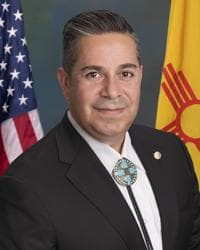
- Ben Luján
- Cosponsors
- - 2 - 2
- Introduced
- In Committee
What this bill would do
The "TEST AI Act of 2025" requires the Director of the National Institute of Standards and Technology to start a pilot program. This program will use testbeds to see if it is possible and a good idea to create measurement standards for evaluating AI systems used by Federal agencies. The process involves collaboration between the Secretary of Commerce and the Secretary of Energy. A working group including government, private sector, and academic members will develop a strategy for these standards. Finally, the Director must report the findings and recommendations to Congress.
Yes· 3 of 14
Does this make what the government does easier for the public to see?+5
The bill requires the publication of the measurement standards strategy on a public website.
Does this give people more control over their personal data?+4
The bill mandates the development of measurement standards specifically for AI privacy and data leakage.
Does this better protect the country from computer attacks?+4
The bill requires standards for AI security and the propensity of systems for leaking data.
The opposite
Would immigrants be better off under this?-4
Citizens of covered foreign countries are explicitly prohibited from serving on the working group.
Who it would affect, and how
Potential Positive Impacts for People
-
Improved AI Safety and Reliability: The bill requires a strategy to develop measurement standards for AI reliability, performance, capability, interpretability, security, privacy, and data bias (Section 3(c)(3)(B)). This could lead to safer and more fair AI systems used by the government.
-
Increased Transparency: The Secretary of Commerce must publish the measurement standards strategy on a public website (Section 3(c)(3)(C)). This provides valuable information to researchers, industrial users, and model developers.
-
Expert Oversight: The Director is allowed to hire experts from industry, academia, and standards organizations to help develop the testbeds (Section 3(d)(2)), ensuring the standards are informed by specialized knowledge.
Potential Negative Impacts for People
- Restrictions on Participation: The bill prohibits any citizen of a "covered foreign country"—which includes China, Russia, North Korea, and Iran—from serving on the Artificial Intelligence Testing Working Group (Section 3(c)(2)(B)). This excludes specific groups of people from contributing to the development of these standards based on their citizenship.
Groups and Interests Ranking
Every group the model scored this bill for, from -10 to +10. Hover a score for the reason it gave.
- Governance And Ideology
- Improves Government Transparency+5Improves Privacy Rights+3Increases Federal Power+2
- Education And Technology
- Improves Data Privacy+4Increases Scientific Research Funding+3Increases Big Tech Regulation+2
- Demographic And Interest Groups
- Good For African Americans+2Good For Business Owners+2Good For Hispanic Americans+2Good For Native Americans+2Good For Students+2Good For Immigrants-4
- National Security And Foreign Policy
- Improves Cybersecurity Defense+4
- Social Issues And Justice
- Improves Racial Equity+3
- Economy And Finance
- Improves Consumer Protection+2
- 5/7/2025
- Read twice and referred to the Committee on Commerce, Science, and Transportation.
- 4 Cosponsors added.
- Introduced in Senate
 Marsha Blackburn
Republican · Tennessee
 Richard Durbin
Democrat · Illinois
 James Risch
Republican · Idaho
 Peter Welch
Democrat · Vermont