Bill · S. 1602· Senate(119-S-1602)
Mathematical and Statistical Modeling Education Act
- Introduced
- 5/5/2025
- Last activity
- 3/20/2026 — Referred sequentially to the Committee on Commerce, Science, and Transportation, pursuant to the order of March 3, 1988, for 30 calendar days excluding any day on which the Senate is not in session, and if not reported by that day, the Committee be discharged from further consideration thereof, and the bill be placed on the calendar.
- Sponsored by
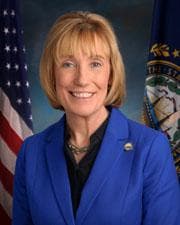
- Maggie Hassan
- Cosponsors
- - 0 - 1
- Introduced
- In Committee
What this bill would do
The Mathematical and Statistical Modeling Education Act aims to modernize STEM education by coordinating Federal research and development. It focuses on integrating mathematical and statistical modeling, data science, and computational thinking into public schools from prekindergarten through grade 12. The bill authorizes the National Science Foundation to provide competitive awards to institutions of higher education and nonprofit organizations to develop innovative teaching approaches. Additionally, it mandates a study by the National Academies of Sciences, Engineering, and Medicine to identify barriers and best practices for implementing these educational models. The goal is to address the STEM skills shortage and better prepare students for modern workplace needs.
Yes· 3 of 31
Would students be better off under this?+8
Directly benefits students with modernized, real-world mathematical education.
Would children be better off under this?+7
Modernizes education and provides better STEM learning opportunities for P-12 students.
Would people in their twenties and thirties be better off under this?+6
Prepares students for better career transitions and high-wage STEM jobs.
The opposite
No question was scored the opposite.
Who it would affect, and how
Potential Positive Impacts for People
-
Increased Career Opportunities: By addressing the STEM skills shortage, the bill helps prepare students for occupations that offer higher wages, more advancement opportunities, and better job security (Section 2(a)(4)).
-
Support for Underrepresented Groups: The bill specifically requires research on engaging students from groups historically underrepresented in STEM and providing them with resources and learning opportunities (Section 2(f)(12), (13), and (15)).
-
Improved Teacher Training: The act provides funding for professional learning and training for educators to enhance their knowledge of statistical problem solving and interdisciplinary teaching (Section 2(f)(1) and (7)).
-
Real-World Learning: Students may benefit from analyzing real data sets from meaningful contexts and participating in community-based learning linked to local business and industry assets (Section 2(f)(3) and (8)).
-
Better Transitions: The bill encourages partnerships that help students navigate critical transitions from middle school to high school, high school to college, and school to internships or jobs (Section 2(c) and (e)(4)).
Potential Negative Impacts for People
-
Limited Duration: The authority to provide awards under this Act expires on September 30, 2029, which may limit the long-term sustainability of the programs started (Section 4(b)).
-
Competitive Funding: Because awards are made on a merit-reviewed, competitive basis, many institutions or nonprofit organizations may not receive the funding needed to implement these changes (Section 2(c)).
Groups and Interests Ranking
Every group the model scored this bill for, from -10 to +10. Hover a score for the reason it gave.
- Demographic And Interest Groups
- Good For Students+8Good For Children+7Good For Women+6Good For Young Adults+6Good For African Americans+5Good For Hispanic Americans+5Good For Low Income Households+5Good For Native Americans+5Good For Rural Residents+5Good For Business Owners+4Good For Men+4Good For Middle Class Households+4Good For People With Disabilities+4Good For Urban Residents+4Good For Asian Americans+3Good For High Income Households+3Good For White Americans+3Good For Farmers+2Good For Middle Aged+2
- Social Issues And Justice
- Improves Racial Equity+5Improves Gender Equality+4Improves Disability Rights+3Improves Poverty Reduction+2
- Economy And Finance
- Increases Job Creation+4Improves Economic Growth+3Improves Small Business Support+2
- Education And Technology
- Increases Scientific Research Funding+5Increases Public School Funding+4
- Environment Energy And Infrastructure
- Improves Rural Development+3
- National Security And Foreign Policy
- Improves Cybersecurity Defense+2
- Governance And Ideology
- Increases Federal Power+1
- 3/20/2026
- Referred sequentially to the Committee on Commerce, Science, and Transportation, pursuant to the order of March 3, 1988, for 30 calendar days excluding any day on which the Senate is not in session, and if not reported by that day, the Committee be discharged from further consideration thereof, and the bill be placed on the calendar.
- 3/11/2026
- Committee on Health, Education, Labor, and Pensions. Reported by Senator Cassidy without amendment. Without written report.
- Placed on Senate Legislative Calendar under General Orders. Calendar No. 353.
- 2/26/2026
- Committee on Health, Education, Labor, and Pensions. Ordered to be reported without amendment favorably.
- 5/5/2025
- Read twice and referred to the Committee on Health, Education, Labor, and Pensions.
- 1 Cosponsor added.
- Introduced in Senate
One bill Congress.gov lists as related to this one — companions in the other chamber, earlier versions, and bills this one absorbed or was folded into.
 Marsha Blackburn
Republican · Tennessee