Bill · S. 1463· Senate(119-S-1463)
Finding ORE Act
- Introduced
- 4/10/2025
- Last activity
- 6/18/2025 — Placed on Senate Legislative Calendar under General Orders. Calendar No. 93.
- Sponsored by
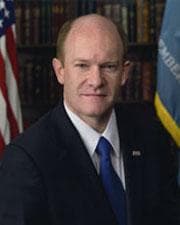
- Christopher Coons
- Cosponsors
- - 1 - 3
- Introduced
- On Calendar
What this bill would do
The Finding ORE Act allows the Secretary of the Interior to create agreements with partner foreign countries to cooperate on mapping rare earth elements and critical minerals. The goal is to make international supply chains for these materials more secure and resilient. The bill focuses on scientific collaboration, training, and facilitating private sector investment. It also expresses a congressional preference for moving critical mineral processing back to the United States.
Yes· 3 of 14
Does this strengthen ties with allied countries?+6
Strengthens ties with allied and partner foreign countries through technical and scientific cooperation.
Would business owners be better off under this?+6
Provides U.S. companies right of first refusal and facilitates private sector investment.
Does this favour talking over confrontation abroad?+5
Creates formal memoranda of understanding for cooperation on critical resources.
The opposite
No question was scored the opposite.
Who it would affect, and how
Potential Positive Impacts for People
- Increased Supply Chain Security: The bill aims to increase the security and resilience of international supply chains for critical minerals and rare earth elements (Section 4(b)).
- Economic Opportunities for U.S. Companies: Private companies based in the U.S. or allied foreign countries are to be offered the right of first refusal for developing these minerals in partner countries (Section 4(b)(2)).
- Educational and Professional Growth: The bill promotes specialized training in geoscience and mineral resource management at institutions of higher education (Section 4(c)(6)).
- Support for Domestic Industry: Congress expresses the sense that the U.S. should prioritize onshoring the processing of critical minerals (Section 2).
- Sustainable Resource Management: The bill encourages scientific collaboration to help partner countries manage their natural resources sustainably (Section 4(c)(4)).
Potential Negative Impacts for People
- Data Restrictions: Mapping data created through these activities will be protected from access or disclosure to entities in countries that are not allied foreign countries or parties to the agreement (Section 4(b)(4)).
Groups and Interests Ranking
Every group the model scored this bill for, from -10 to +10. Hover a score for the reason it gave.
- National Security And Foreign Policy
- Improves International Alliances+6Improves Diplomatic Engagement+5Improves International Trade+4
- Demographic And Interest Groups
- Good For Business Owners+6Good For Students+4Good For Young Adults+3
- Economy And Finance
- Improves Economic Growth+4Increases Job Creation+3
- Environment Energy And Infrastructure
- Increases Renewable Energy Investment+4Reduces Carbon Emissions+2Improves Environmental Protections+1
- Education And Technology
- Increases Scientific Research Funding+5
- Governance And Ideology
- Improves Government Transparency+2Increases Federal Power+2
- 6/18/2025
- Committee on Foreign Relations. Reported by Senator Risch with an amendment in the nature of a substitute. Without written report.
- Placed on Senate Legislative Calendar under General Orders. Calendar No. 93.
- 6/9/2025
- 1 Cosponsor added.
- 6/5/2025
- Committee on Foreign Relations. Ordered to be reported with an amendment in the nature of a substitute favorably.
- 4/10/2025
- Read twice and referred to the Committee on Foreign Relations.
- 3 Cosponsors added.
- Introduced in Senate
One bill Congress.gov lists as related to this one — companions in the other chamber, earlier versions, and bills this one absorbed or was folded into.
 John Cornyn
Republican · Texas
 Ted Cruz
Republican · Texas
 John Hickenlooper
Democrat · Colorado
 Todd Young
Republican · Indiana