Bill · S. 1451· Senate(119-S-1451)
Helene Small Business Recovery Act
- Introduced
- 4/10/2025
- Last activity
- 4/10/2025 — Read twice and referred to the Committee on Homeland Security and Governmental Affairs.
- Sponsored by
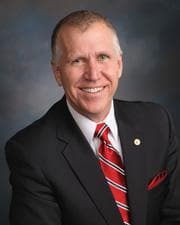
- Thomas Tillis
- Cosponsors
- None
- Introduced
- In Committee
What this bill would do
This bill, known as the "Helene Small Business Recovery Act," focuses on waiving the duplication of benefits rule for certain assistance. It allows the President to waive specific prohibitions under the Robert T. Stafford Disaster Relief and Emergency Assistance Act. This waiver can be requested by a Governor on behalf of a state or for specific persons, businesses, or entities suffering losses. The President must find that the waiver is in the public interest and won't lead to waste, fraud, or abuse. The bill specifically applies to major disasters or emergencies declared during the 2023 or 2024 calendar years.
Yes· 3 of 5
Would business owners be better off under this?+7
It provides easier access to federal assistance for businesses facing disaster losses.
Does this improve help for people hit by a disaster?+7
The bill facilitates faster federal assistance by allowing the President to waive duplication of benefits during declared disasters.
Does this make it easier to run a small business?+6
The bill eases access to disaster assistance for businesses by waiving duplication of benefits rules.
The opposite
No question was scored the opposite.
Who it would affect, and how
Potential Positive Impacts for People
-
Increased Access to Assistance: The President can waive the general prohibition against duplication of benefits upon request from a Governor or on behalf of a person or business (Section 2(b)(1)). This could help those suffering losses from a major disaster or emergency get the help they need.
-
Protection of Loans: The President is prohibited from determining that a loan is a duplication of assistance as long as the federal assistance is used toward the actual loss suffered (Section 2(b)(4)). This provides more certainty for those using loans to recover.
-
Elimination of Income Barriers: No income threshold may be used to limit a recipient's eligibility to qualify for a waiver (Section 2(b)(5)). This ensures that a person's income level does not prevent them from receiving assistance under this waiver.
Potential Negative Impacts for People
-
Presidential Discretion: The President has the authority to consider various factors like cost effectiveness, equity, and other public policy matters when deciding whether to grant a waiver (Section 2(b)(2)). This means the outcome is not guaranteed and depends on the President's specific determinations.
-
Risk of Waste or Abuse: A waiver can only be granted if the President finds it will not result in waste, fraud, or abuse (Section 2(b)(1)(A)). This means if the President finds these risks exist, the assistance may be denied.
Groups and Interests Ranking
Every group the model scored this bill for, from -10 to +10. Hover a score for the reason it gave.
- Demographic And Interest Groups
- Good For Business Owners+7Good For Low Income Households+5
- Environment Energy And Infrastructure
- Improves Disaster Relief And F E M A+7
- Economy And Finance
- Improves Small Business Support+6
- Governance And Ideology
- Increases Federal Power+4
- 4/10/2025
- Read twice and referred to the Committee on Homeland Security and Governmental Affairs.
- Introduced in Senate