Bill · S. 1401· Senate(119-S-1401)
Targeting Child Predators Act of 2025
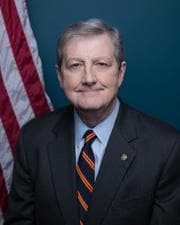
- Introduced
- 4/9/2025
- Last activity
- 4/9/2025 — Read twice and referred to the Committee on the Judiciary.
- Sponsored by
- John Kennedy
- Cosponsors
- - 3 - 0
- Introduced
- In Committee
What this bill would do
The "Targeting Child Predators Act of 2025" amends title 18 of the United States Code regarding administrative subpoenas. It establishes a specific certification process for when a Federal official requires a recipient to keep a subpoena confidential. This process allows for nondisclosure requirements for a period of 180 days if certain risks are identified. The bill also creates a mechanism for judicial review of these nondisclosure requirements. It outlines how recipients can petition a court to review these requirements and how the government can apply for orders to maintain secrecy.
Who it would affect, and how
Potential Positive Impacts for People
-
Protection of Investigations and Safety: The bill allows Federal officials to require nondisclosure to prevent endangering lives, preventing flight from prosecution, preventing the destruction of evidence, or preventing the intimidation of witnesses (Section 2, Sec. 3486(a)(6)(D)(ii)(II)).
-
Legal Recourse for Recipients: Individuals or entities receiving a subpoena have the right to seek judicial review of a nondisclosure requirement through a petition in court (Section 3, Sec. 3486A(a)(1)(A)).
-
Ability to Seek Legal Advice: Recipients of a subpoena are permitted to disclose information subject to nondisclosure requirements to an attorney to obtain legal advice or assistance (Section 2, Sec. 3486(a)(6)(D)(ii)(I)(aa)).
-
Limited Disclosure for Compliance: Recipients may disclose information to persons necessary to comply with the subpoena request (Section 2, Sec. 3486(a)(6)(D)(ii)(I)(aa)).
Potential Negative Impacts for People
-
Restrictions on Disclosure: Recipients of a subpoena may be prohibited from disclosing to any person that a Federal official has sought or obtained access to specific records or information for a period of 180 days (Section 2, Sec. 3486(a)(6)(D)(i)(I)).
-
Ongoing Secrecy Requirements: Nondisclosure orders can be extended by a district court for additional periods of 180 days, or even longer if the court determines the circumstances necessitate it (Section 3, Sec. 3486A(a)(4)).
-
Limited Transparency in Legal Proceedings: Court hearings related to these matters must be closed to the public to prevent unauthorized disclosure, and various legal documents must be kept under seal (Section 3, Sec. 3486A(b)).
- 6/26/2025
- 1 Cosponsor added.
- 4/9/2025
- Read twice and referred to the Committee on the Judiciary.
- 2 Cosponsors added.
- Introduced in Senate
One bill Congress.gov lists as related to this one — companions in the other chamber, earlier versions, and bills this one absorbed or was folded into.
 John Cornyn
Republican · Texas
 James Justice
Republican · West Virginia
 Pete Ricketts
Republican · Nebraska