Bill · S. 1398· Senate(119-S-1398)
Organic Imports Verification Act of 2025
- Introduced
- 4/9/2025
- Last activity
- 4/9/2025 — Read twice and referred to the Committee on Agriculture, Nutrition, and Forestry.
- Sponsored by
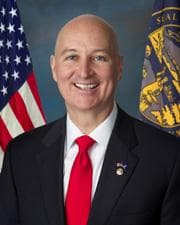
- Pete Ricketts
- Cosponsors
- - 2 - 1
- Introduced
- In Committee
What this bill would do
The Organic Imports Verification Act of 2025 requires the Secretary of Agriculture to monitor imported organic feedstuffs. The Secretary must submit an annual report to Congress regarding residue testing for covered organic feedstuffs and other imported bulk organic feedstuffs. To facilitate this, the Secretary will develop risk-based protocols to determine which feedstuffs need testing and the specific parameters for that testing. The Secretary is also tasked with maintaining and updating a yearly list of these covered feedstuffs. If testing reveals prohibited substances above permitted levels, those shipments must be excluded from organic sale.
Yes· 3 of 5
Does this make what the government does easier for the public to see?+5
The bill improves transparency through mandatory annual reports to Congress regarding organic residue testing.
Does this give people more protection from unfair business practices?+5
The bill enhances consumer protection by ensuring organic feed integrity through mandatory residue testing.
Does this better protect air, water and wildlife?+5
The bill improves environmental integrity by ensuring organic feed remains free from prohibited substances.
The opposite
No question was scored the opposite.
Who it would affect, and how
Potential Positive Impacts for People
-
Increased Oversight of Organic Imports: The bill requires the Secretary of Agriculture to carry out annual residue testing for each covered organic feedstuff (Section 4(c)). This ensures that organic feed is being monitored for prohibited substances.
-
Accountability through Reporting: The Secretary must submit a report to Congress annually that includes testing frequency, methods, results, standards, and any actions taken (Section 3(a) and 3(c)). This provides transparency regarding the testing process.
-
Protection of Organic Integrity: If residue testing shows detectable prohibited substances exceeding permitted levels, the shipment is excluded from organic sale and cannot be labeled as organic (Section 4(d)). This prevents contaminated products from being represented as organic.
Potential Negative Impacts for People
- Confidentiality of Safety Lists: The list of covered organic feedstuffs established by the Secretary is not made available to the public (Section 4(b)(2)). This means the specific list of items being monitored is kept private.
Groups and Interests Ranking
Every group the model scored this bill for, from -10 to +10. Hover a score for the reason it gave.
- Governance And Ideology
- Improves Government Transparency+5Increases Federal Power+3
- Economy And Finance
- Improves Consumer Protection+5
- Environment Energy And Infrastructure
- Improves Environmental Protections+5
- Demographic And Interest Groups
- Good For Farmers+3
- 3/10/2026
- 1 Cosponsor added.
- 4/9/2025
- Read twice and referred to the Committee on Agriculture, Nutrition, and Forestry.
- 2 Cosponsors added.
- Introduced in Senate
One bill Congress.gov lists as related to this one — companions in the other chamber, earlier versions, and bills this one absorbed or was folded into.
 Chuck Grassley
Republican · Iowa
 Tim Scott
Republican · South Carolina
 Tina Smith
Democrat · Minnesota