Bill · S. 1299· Senate(119-S-1299)
Housing Supply Frameworks Act
- Introduced
- 4/3/2025
- Last activity
- 4/3/2025 — Read twice and referred to the Committee on Banking, Housing, and Urban Affairs.
- Sponsored by
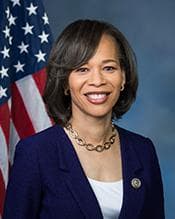
- Lisa Blunt Rochester
- Cosponsors
- - 3 - 4
- Introduced
- In Committee
What this bill would do
This bill directs the Department of Housing and Urban Development to publish guidelines and best practices for State and local zoning frameworks. It requires the Assistant Secretary for Policy Development and Research to create these guidelines within three years of the Act's enactment. During the first two years, the Assistant Secretary must publish draft guidelines for public comment and establish a diverse task force for consultation. The guidelines will cover various topics such as reducing parking minimums, allowing duplexes and triplexes, and encouraging affordable housing. Additionally, the bill abolishes the Regulatory Barriers Clearinghouse and authorizes appropriations of $3,000,000 for each fiscal year from 2026 through 2030.
Yes· 3 of 31
Does this make housing cost less?+8
The primary intent is to increase the supply and accessibility of affordable housing.
Would households on low incomes be better off under this?+7
The bill specifically aims to increase the production of affordable housing.
Would people in cities be better off under this?+6
Increased density and transit-oriented development primarily benefit urban areas.
The opposite
Does this leave more decisions to the states?-2
The bill seeks to influence state and local zoning frameworks via federal guidelines.
Who it would affect, and how
Potential Positive Impacts for People
-
Better Housing Access: Section 4(a) directs the creation of guidelines to support adequate housing production and provide housing opportunities for individuals at every income level across communities. This could help everyday people find places to live that they can actually afford.
-
Inclusive Public Input: Section 4(c)(2)(J) includes provisions to reform the public engagement process by improving access for persons with limited English proficiency, improving communication for persons with disabilities, leveraging virtual meeting technologies, and doing proactive outreach. This ensures that more citizens have a real voice in community zoning decisions.
-
Preservation of Low-Income Communities: Section 4(c)(2)(O) outlines mechanisms to preserve affordability, limit the disruption of low-income communities, and prevent the displacement of existing residents. This protects vulnerable neighbors from being priced out of their homes.
Potential Negative Impacts for People
Based on the provided text, there are no specific provisions identified that create direct negative consequences or burdens for individuals or groups of people in the United States.
Groups and Interests Ranking
Every group the model scored this bill for, from -10 to +10. Hover a score for the reason it gave.
- Demographic And Interest Groups
- Good For Low Income Households+7Good For Urban Residents+6Good For Middle Class Households+5Good For People With Disabilities+5Good For African Americans+4Good For Asian Americans+4Good For Business Owners+4Good For Hispanic Americans+4Good For Retirees+4Good For Students+4Good For White Americans+4Good For Young Adults+4Good For High Income Households+3Good For Immigrants+3Good For Middle Aged+3Good For Seniors+3Good For Veterans+3Good For Rural Residents+2
- Social Issues And Justice
- Improves Affordable Housing+8Improves Poverty Reduction+5Reduces Homelessness+5Improves Disability Rights+3Improves Racial Equity+3
- Economy And Finance
- Improves Economic Growth+3Increases Job Creation+3Reduces Inflation+2
- Environment Energy And Infrastructure
- Improves Public Transit+4Improves Rural Development+2Reduces Carbon Emissions+2
- Governance And Ideology
- Increases Federal Power+3Improves Government Transparency+2Increase States Rights-2
- 6/24/2025
- 1 Cosponsor added.
- 6/11/2025
- 1 Cosponsor added.
- 5/5/2025
- 2 Cosponsors added.
- 4/3/2025
- Read twice and referred to the Committee on Banking, Housing, and Urban Affairs.
- 3 Cosponsors added.
- Introduced in Senate
2 bills Congress.gov lists as related to this one — companions in the other chamber, earlier versions, and bills this one absorbed or was folded into.
 Mike Crapo
Republican · Idaho
 Deb Fischer
Republican · Nebraska
 John Fetterman
Democrat · Pennsylvania
 Kirsten Gillibrand
Democrat · New York
 Pete Ricketts
Republican · Nebraska
 Tina Smith
Democrat · Minnesota
 Thomas Tillis
Republican · North Carolina