Bill · S. 1184· Senate(119-S-1184)
Cross Border Aerial Law Enforcement Operations Act
- Introduced
- 3/27/2025
- Last activity
- 3/27/2025 — Read twice and referred to the Committee on Homeland Security and Governmental Affairs.
- Sponsored by
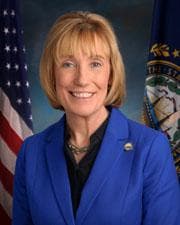
- Maggie Hassan
- Cosponsors
- - 0 - 1
- Introduced
- In Committee
What this bill would do
This bill, known as the "Cross Border Aerial Law Enforcement Operations Act," directs the Secretary of Homeland Security to negotiate a bilateral agreement with Canada. The goal is to establish an integrated aerial law enforcement program along the international border between the United States and Canada. This program could include various federal agencies and Canadian law enforcement agencies. The scope of the program is generally limited to 50 miles from the border, except for specific emergencies or airport needs. Additionally, the Secretary must submit reports regarding the program and the use of unmanned aircraft systems along the northern border.
Yes· 3 of 5
Does this tighten control of the border?+5
The bill establishes an integrated aerial law enforcement program to monitor the U.S.-Canada border.
Does this strengthen ties with allied countries?+4
The bill promotes bilateral cooperation between the United States and Canada on border enforcement.
Does this favour talking over confrontation abroad?+3
The bill directs the negotiation of a formal bilateral agreement with the Canadian government.
The opposite· 3 of 4
Does this give the government more power to monitor people inside the country?-3
The program involves aerial law enforcement and unmanned aircraft systems which may impact privacy.
Does this protect people from being watched or searched?-2
The bill notes potential risks to privacy from the operation of unmanned aircraft systems.
Would immigrants be better off under this?-2
Increased aerial law enforcement presence may impact those crossing the border.
Who it would affect, and how
Potential Positive Impacts for People
-
Protection of Individual Rights: The bill requires that the program includes specific provisions to protect the privacy and civil liberties of United States citizens (Section 2(b)(5)(A)).
-
Officer Accountability through Training: To ensure the safety of rights, any officer participating in the program must complete training regarding their responsibility to protect the privacy, civil liberties, and civil rights of United States citizens (Section 2(b)(5)(B)).
-
Enhanced Border Oversight: The bill requires a report on the use of unmanned aircraft systems to address issues such as the movement of contraband or persons across the border (Section 3(1) and 3(3)(B)).
Potential Negative Impacts for People
-
Jurisdictional Reach: While the program is generally limited to 50 miles from the border, aircraft may leave this territory for airport needs or due to exigent circumstances like emergencies on the ground or an aircraft (Section 2(b)(2)).
-
Privacy and Liberty Risks: The bill acknowledges that there are potential risks to civil rights, civil liberties, and privacy resulting from the Department of Homeland Security operating unmanned aircraft systems and counter-unmanned aircraft systems along the northern border (Section 3(5)).
Groups and Interests Ranking
Every group the model scored this bill for, from -10 to +10. Hover a score for the reason it gave.
- Social Issues And Justice
- Improves Border Security+5
- National Security And Foreign Policy
- Improves International Alliances+4Improves Diplomatic Engagement+3Increases Domestic Surveillance-3
- Governance And Ideology
- Improves Government Transparency+3Increases Federal Power+2Improves Privacy Rights-2
- Demographic And Interest Groups
- Good For Immigrants-2
- Education And Technology
- Improves Data Privacy-2
- 3/27/2025
- Read twice and referred to the Committee on Homeland Security and Governmental Affairs.
- 1 Cosponsor added.
- Introduced in Senate
 James Lankford
Republican · Oklahoma