Bill · H.Res. 947· House(119-HRES-947)
Expressing that compelled political litmus tests used by public institutions to require individuals to identify with specific ideological views are directly at odds with the principles of academic freedom and free speech and in violation of the First Amendment of the Constitution.
- Introduced
- 12/11/2025
- Last activity
- 12/11/2025 — Referred to the House Committee on Education and Workforce.
- Sponsored by
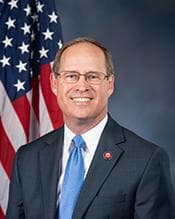
- Gregory Murphy
- Cosponsors
- None
- Introduced
- In Committee
A House resolution is the House speaking for itself: stating a position, honouring someone, or setting its own rules. Adopting it is the whole process. Once the House agrees to it, it is officially the House's word; it is not a law, so the Senate and the President have no part in it.
What this bill would do
This resolution expresses that compelled political litmus tests used by public institutions are against academic freedom and the First Amendment. It argues that requiring individuals to identify with specific ideological views, such as diversity, equity, and inclusion (DEI), violates constitutional principles. The text highlights concerns regarding how these requirements affect faculty hiring, promotion, and student admissions. It specifically addresses the use of DEI statements in higher education and medical school admissions. Finally, the resolution condemns public institutions for conditioning status on political pledges and discourages the request of such statements.
Yes
Does this protect the individual right to speak freely?+8
The resolution actively protects the First Amendment by opposing compelled political speech and ideological litmus tests.
Would students be better off under this?+5
The resolution seeks to protect students from being forced to endorse specific political ideologies for admission.
The opposite
Would Black Americans be better off under this?-2
The resolution challenges DEI standards which are frequently used to promote racial equity.
Does this narrow racial gaps in how people are treated?-2
The resolution's opposition to DEI requirements may reduce institutional focus on racial equity initiatives.
Who it would affect, and how
Potential Positive Impacts for People
-
Protection of Academic Freedom: The resolution aims to protect the ability of teachers and students to inquire, study, and evaluate without being forced into a "strait jacket" of specific ideologies (Sweezy v. New Hampshire).
-
Protection of Free Speech: By opposing compelled speech, the resolution seeks to uphold the First Amendment principle that the government cannot force citizens to confess their faith in certain political or religious matters (West Virginia State Board of Education v. Barnette).
-
Increased Viewpoint Diversity: The text suggests that moving away from required ideological programming could allow institutions to prioritize programming that supports viewpoint diversity rather than just specific social movements.
Potential Negative Impacts for People
-
Impact on Faculty and Applicants: The resolution notes that current practices involving DEI statements can penalize faculty or applicants who hold dissenting opinions on matters of public concern.
-
Impact on Medical Students: The text mentions that medical schools are probing student applicants on their views or experiences regarding DEI, which acts as an "overt test on identity politics" for admissions.
-
Institutional Staffing Concerns: The text states that the proliferation of DEI administrators may come at the expense of other university departments that are understaffed.
Groups and Interests Ranking
Every group the model scored this bill for, from -10 to +10. Hover a score for the reason it gave.
- Governance And Ideology
- Improves Freedom Of Speech+8
- Demographic And Interest Groups
- Good For Students+5Good For African Americans-2
- Social Issues And Justice
- Improves Racial Equity-2
- 12/11/2025
- Submitted in House
- Referred to the House Committee on Education and Workforce.