Bill · H.Res. 836· House(119-HRES-836)
Calling on the United States to champion a regional artificial intelligence strategy in the Americas to foster inclusive artificial intelligence systems that combat biases within marginalized groups and promote social justice, economic well-being, and democratic values.
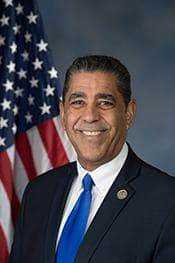
- Introduced
- 10/28/2025
- Last activity
- 10/28/2025 — Referred to the Committee on Foreign Affairs, and in addition to the Committee on Science, Space, and Technology, for a period to be subsequently determined by the Speaker, in each case for consideration of such provisions as fall within the jurisdiction of the committee concerned.
- Sponsored by
- Adriano Espaillat
- Cosponsors
- None
- Introduced
- In Committee
A House resolution is the House speaking for itself: stating a position, honouring someone, or setting its own rules. Adopting it is the whole process. Once the House agrees to it, it is officially the House's word; it is not a law, so the Senate and the President have no part in it.
What this bill would do
This resolution calls on the United States to champion a regional artificial intelligence strategy across the Americas. It aims to foster inclusive artificial intelligence systems that combat biases against marginalized groups. The text highlights census data regarding diverse populations in the United States and notes how artificial intelligence can amplify historical inequalities. It applauds the White House Office of Science and Technology Policy for publishing the Blueprint for an AI Bill of Rights. Finally, the measure urges the United States Government to leverage funding, support ethical frameworks, and increase international cooperation regarding artificial intelligence governance.
Yes· 3 of 26
Does this strengthen ties with allied countries?+5
The measure urges increased cooperation and dialogue with international organizations and trade partners in the Americas.
Does this narrow racial gaps in how people are treated?+5
The resolution explicitly aims to foster inclusive AI systems that combat racial biases and inequalities against marginalized groups.
Would Black Americans be better off under this?+4
The resolution specifically aims to combat biases in AI algorithms that disproportionately misidentify Black and darker-skinned individuals.
The opposite
No question was scored the opposite.
Who it would affect, and how
Potential Positive Impacts for People
-
Protection of civil rights and privacy: Resolved clause (1) applauds the White House Office of Science and Technology Policy for publishing the Blueprint for an AI Bill of Rights, which consists of five principles applied to automated systems to protect civil rights, civil liberties, privacy, and equal opportunities. This may benefit individuals by establishing safeguards for automated technologies.
-
Promotion of inclusive technology: Resolved clause (2) declares inclusive artificial intelligence research, design, use, regulation, and deployment a priority for United States domestic and foreign policy, urging a strategy guided by principles that protect equal opportunities and access to critical resources. This could help foster systems that combat biases within marginalized groups.
-
Economic growth and infrastructure investments: Resolved clause (5) calls on the United States Government to leverage funding from economic and international development agencies to invest in artificial intelligence education, training, and infrastructure throughout the Western Hemisphere. This is intended to harness diverse populations for economic growth and societal progress.
-
Establishment of ethical standards: Resolved clause (6) calls on the United States Government to support the establishment of common ethical frameworks, standards, and regulations for artificial intelligence development. This provision aims to prioritize fairness, accountability, trustworthiness, privacy, and the protection of individual rights.
-
Potential Negative Impacts for People
- Based on the provided text, there are no specific sections or provisions identified that outline negative consequences or burdens for individuals or groups of people in the United States.
Groups and Interests Ranking
Every group the model scored this bill for, from -10 to +10. Hover a score for the reason it gave.
- Demographic And Interest Groups
- Good For African Americans+4Good For Hispanic Americans+4Good For Asian Americans+3Good For Native Americans+3Good For Business Owners+2Good For Children+2Good For Low Income Households+2Good For Students+2Good For Young Adults+2
- National Security And Foreign Policy
- Improves International Alliances+5Improves Diplomatic Engagement+4Improves International Trade+3Increases Foreign Aid+3Improves Cybersecurity Defense+2
- Education And Technology
- Improves Data Privacy+4Increases Scientific Research Funding+4Increases Big Tech Regulation+3
- Economy And Finance
- Improves Consumer Protection+3Improves Economic Growth+3Improves Small Business Support+2Increases Job Creation+2
- Governance And Ideology
- Improves Privacy Rights+3Improves Government Transparency+2Increases Federal Power+1
- Social Issues And Justice
- Improves Racial Equity+5
- Healthcare
- Increases Research Funding+3
- 10/28/2025
- Submitted in House
- Referred to the Committee on Foreign Affairs, and in addition to the Committee on Science, Space, and Technology, for a period to be subsequently determined by the Speaker, in each case for consideration of such provisions as fall within the jurisdiction of the committee concerned.