Bill · H.Res. 414· House(119-HRES-414)
Recognizing that the United States has a moral and legal obligation to provide reparations for the crime of enslavement of Africans and its lasting harm on the lives of millions of Black people in the United States.
- Introduced
- 5/15/2025
- Last activity
- 5/15/2025 — Referred to the House Committee on the Judiciary.
- Sponsored by
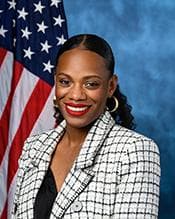
- Summer Lee
- Cosponsors
- - 13 - 0
- Introduced
- In Committee
A House resolution is the House speaking for itself: stating a position, honouring someone, or setting its own rules. Adopting it is the whole process. Once the House agrees to it, it is officially the House's word; it is not a law, so the Senate and the President have no part in it.
What this bill would do
This resolution recognizes the Federal Government's moral and legal obligation to provide reparations to the descendants of enslaved Black people and people of African descent. It cites the lasting harms caused by chattel slavery, government-sanctioned segregation, and various discriminatory policies. The text argues that these historical wrongs have led to modern-day economic, social, and health disparities. It calls for a variety of forms of redress, including direct monetary compensation and targeted benefits. Ultimately, the resolution seeks to address the racial wealth gap and the cumulative damage caused by systemic racism.
Yes· 3 of 20
Does this narrow racial gaps in how people are treated?+10
The entire resolution is designed to address and rectify systemic racial inequality and harm.
Would Black Americans be better off under this?+10
The resolution is explicitly designed to provide redress and benefits to Black people and their descendants.
Is this likely to lift people out of poverty?+9
Direct monetary reparations are intended to address the racial wealth gap and economic deprivation.
The opposite
Does this reduce what the federal government owes?-5
The massive scale of proposed reparations could significantly increase federal spending and national debt.
Does this reduce what the federal government spends?-5
The bill calls for extensive new federal spending programs for compensation and social redress.
Does this make the government pay for what it commits to?-5
The estimated cost of trillions of dollars poses significant fiscal challenges.
Who it would affect, and how
Potential Positive Impacts for People
-
Financial Compensation: The resolution calls for direct monetary reparations to address the racial wealth gap and the economic exploitation caused by slavery (Resolution Section 1).
-
Education Access: The text suggests providing free education to students attending historically Black colleges and universities (Resolution Whereas clauses).
-
Health and Wellness Support: It calls for the institutionalization of holistic, preventive, and curative mental health and treatment services for Black communities (Resolution Whereas clauses).
-
Property and Land Redress: The resolution seeks to return or provide remedy for property taken through eminent domain or restrictive covenants (Resolution Whereas clauses).
-
Cultural Preservation: It proposes the restoration of African burial grounds and the establishment of markers at sites of massacres or lynchings to honor historical legacies (Resolution Whereas clauses).
-
Voting Rights Restoration: The text advocates for the restoration of voting rights for formerly and currently incarcerated persons (Resolution Whereas clauses).
Potential Negative Impacts for People
-
Economic Cost: The resolution notes that economists have estimated the required financial reparations to be at minimum $16,000,000,000,000 (Resolution Whereas clauses).
-
Risk of Poor Implementation: The text mentions that in other countries, such as South Africa, Canada, and Colombia, poorly designed reparations processes have failed to bring justice and created new forms of harm (Resolution Whereas clauses).
Groups and Interests Ranking
Every group the model scored this bill for, from -10 to +10. Hover a score for the reason it gave.
- Social Issues And Justice
- Improves Racial Equity+10Improves Poverty Reduction+9Improves Affordable Housing+8Improves Voting Rights+8Improves Criminal Sentencing Reform+7Improves Policing Reform+5
- Demographic And Interest Groups
- Good For African Americans+10Good For Low Income Households+9Good For Farmers+8Good For Students+8
- Education And Technology
- Improves College Affordability+9Increases Public School Funding+8
- Governance And Ideology
- Increases Federal Power+6Improves Due Process+5Improves Government Transparency+5
- Healthcare
- Improves Mental Health Access+8Improves Healthcare Access+7
- Environment Energy And Infrastructure
- Improves Environmental Protections+7Improves Rural Development+7
- Economy And Finance
- Improves Economic Growth+5Improves Fiscal Responsibility-5Reduces Government Spending-5Reduces National Debt-5
- 5/15/2025
- Submitted in House
- Referred to the House Committee on the Judiciary.
- 13 Cosponsors added.
 Jasmine Crockett
Democrat · Texas
 Valerie Foushee
Democrat · North Carolina
 Al Green
Democrat · Texas
 Henry Johnson
Democrat · Georgia
 Jonathan Jackson
Democrat · Illinois
 LaMonica McIver
Democrat · New Jersey
 Ilhan Omar
Democrat · Minnesota
 Ayanna Pressley
Democrat · Massachusetts
 Delia Ramirez
Democrat · Illinois
 Lateefah Simon
Democrat · California
 Rashida Tlaib
Democrat · Michigan
 Shri Thanedar
Democrat · Michigan
 Nikema Williams
Democrat · Georgia