Bill · H.Res. 36· House(119-HRES-36)
Finding Federal Savings Committee Resolution
- Introduced
- 1/13/2025
- Last activity
- 1/13/2025 — Referred to the House Committee on Rules.
- Sponsored by
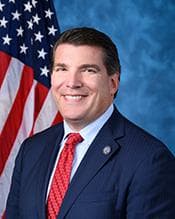
- Jay Obernolte
- Cosponsors
- - 6 - 0
- Introduced
- In Committee
A House resolution is the House speaking for itself: stating a position, honouring someone, or setting its own rules. Adopting it is the whole process. Once the House agrees to it, it is officially the House's word; it is not a law, so the Senate and the President have no part in it.
What this bill would do
H. Res. 36, known as the Finding Federal Savings Committee Resolution, amends the Rules of the House of Representatives to establish the Committee on the Elimination of Nonessential Federal Programs. This new committee is tasked with researching, reviewing, and studying federal programs that are underperforming or nonessential to determine if they should be modified or eliminated. The committee must submit reports at least once a year along with legislation to eliminate those programs and make rescissions based on its findings. The committee is composed of specific members from the Appropriations, Budget, Oversight and Government Reform, and Ways and Means committees, alongside a Chair and Vice Chair from different political parties. The resolution also sets up expedited procedures for legislation reported by this committee, including a limit on debate time and a ban on amendments. The committee will automatically stop existing at the close of the 120th Congress.
Yes
Does this reduce what the federal government spends?+7
The bill establishes a committee specifically tasked with identifying and submitting legislation to eliminate underperforming or nonessential federal programs.
The opposite
Would households on low incomes be better off under this?-3
The potential elimination of federal programs may negatively impact households that rely on social safety nets.
Does this make what the government does easier for the public to see?-2
The expedited legislative procedures limit debate and prevent amendments, which can reduce public transparency and deliberation during the legislative process.
Who it would affect, and how
Potential Positive Impacts for People
- Section 2(b) establishes that the committee must research, review, and study federal programs that are underperforming or nonessential, and develop recommendations and legislation to modify or eliminate them. This could be considered positive because it aims to target ineffective government operations.
Potential Negative Impacts for People
- Section 2(d) establishes expedited procedures where debate on the bill or resolution is limited to not more than 10 hours, and an amendment to or motion to recommit the bill or resolution is not in order. This could be considered negative because it restricts debate and blocks representatives from offering amendments to the legislation.
Groups and Interests Ranking
Every group the model scored this bill for, from -10 to +10. Hover a score for the reason it gave.
- Economy And Finance
- Reduces Government Spending+7
- Demographic And Interest Groups
- Good For Low Income Households-3
- Governance And Ideology
- Improves Government Transparency-2
- 1/16/2025
- 1 Cosponsor added.
- 1/15/2025
- 1 Cosponsor added.
- 1/13/2025
- Submitted in House
- Referred to the House Committee on Rules.
- 4 Cosponsors added.
 James Baird
Republican · Indiana
 Scott Franklin
Republican · Florida
 Claudia Tenney
Republican · New York
 David Valadao
Republican · California
 Daniel Webster
Republican · Florida
 Randy Weber
Republican · Texas