Bill · H.Res. 347· House(119-HRES-347)
Recognizing the significant impact and legacy of Cecil Corbin-Mark in the environmental justice community and further recognizing that climate change most severely impacts vulnerable and disadvantaged communities in the United States and around the world, and that it is the responsibility of the United States Government to work with its global partners to promote environmental justice.
- Introduced
- 4/24/2025
- Last activity
- 4/24/2025 — Referred to the House Committee on Foreign Affairs.
- Sponsored by
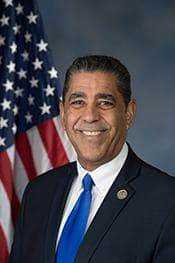
- Adriano Espaillat
- Cosponsors
- None
- Introduced
- In Committee
A House resolution is the House speaking for itself: stating a position, honouring someone, or setting its own rules. Adopting it is the whole process. Once the House agrees to it, it is officially the House's word; it is not a law, so the Senate and the President have no part in it.
What this bill would do
This bill acknowledges the impact of climate change on vulnerable communities and the legacy of Cecil Corbin-Mark in environmental justice. It emphasizes the U.S. government's responsibility to promote environmental justice with global partners. The resolution urges global cooperation to prioritize climate adaptation for disadvantaged communities and reduce greenhouse gas emissions.
Potential Positive Impacts for People
-
Focus on Vulnerable Communities: The bill specifically recognizes that climate change impacts communities of color, indigenous peoples, and other frontline communities most severely (Resolution sections 1, 2, 4). This focus could lead to policies and resources directed toward these groups, offering them greater protection and support.
-
Global Cooperation: The bill promotes the idea that the US Government should work with global partners to promote environmental justice and climate justice (Resolution sections 1, 3, 4). This cooperation could lead to more effective solutions and resource sharing to combat climate change and its effects, benefiting people worldwide.
-
Climate Adaptation: The bill urges the United States Government to expand collaboration and cooperation among its global partners to pursue policies that prioritize climate adaptation among vulnerable and disadvantaged communities (Resolution section 4). It also expresses the need for all countries to promote vulnerable community-focused adaptation to occur across all sectors, including in agriculture, infrastructure, and health (Resolution section 5).
Potential Negative Impacts for People
- This resolution does not seem to have any negative impacts for people.
Yes· 3 of 35
Would Black Americans be better off under this?+8
Specifically highlights the disproportionate harm to people of color and calls for environmental justice.
Would Hispanic Americans be better off under this?+8
Specifically focuses on environmental justice for communities of color and Central American regions.
Would Asian Americans be better off under this?+8
Addresses the disproportionate impact of climate change on people of color.
The opposite
No question was scored the opposite.
Groups and Interests Ranking
Every group the model scored this bill for, from -10 to +10. Hover a score for the reason it gave.
- Demographic And Interest Groups
- Good For African Americans+8Good For Asian Americans+8Good For Hispanic Americans+8Good For Native Americans+8Good For Farmers+7Good For Low Income Households+7Good For Immigrants+6Good For Rural Residents+6Good For Urban Residents+5Good For Children+4Good For People With Disabilities+4Good For Retirees+4Good For Seniors+4Good For Students+4Good For Women+4Good For Young Adults+4Good For Men+3Good For Middle Aged+3Good For Middle Class Households+3Good For White Americans+3Good For High Income Households+2
- Environment Energy And Infrastructure
- Improves Environmental Protections+8Reduces Carbon Emissions+8Reduces Fossil Fuel Production+5Improves Disaster Relief And F E M A+4Improves Rural Development+4Increases Renewable Energy Investment+4
- Social Issues And Justice
- Improves Racial Equity+7Improves Poverty Reduction+3Improves Disability Rights+2Improves Gender Equality+2
- National Security And Foreign Policy
- Improves Diplomatic Engagement+5Improves International Alliances+5Increases Foreign Aid+3
- Healthcare
- Improves Healthcare Access+2
- 4/24/2025
- Submitted in House
- Referred to the House Committee on Foreign Affairs.