Bill · H.Res. 340· House(119-HRES-340)
Recognizing the significance of "Community College Month" in April 2025 as a celebration of the more than 1,000 community colleges throughout the United States that support access to higher education, workforce training, and more, and broadly sustain and advance the economic prosperity of the United States.
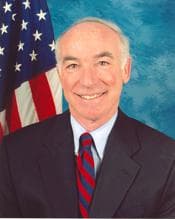
- Introduced
- 4/21/2025
- Last activity
- 4/21/2025 — Referred to the House Committee on Oversight and Government Reform.
- Sponsored by
- Joe Courtney
- Cosponsors
- - 25 - 3
- Introduced
- In Committee
A House resolution is the House speaking for itself: stating a position, honouring someone, or setting its own rules. Adopting it is the whole process. Once the House agrees to it, it is officially the House's word; it is not a law, so the Senate and the President have no part in it.
What this bill would do
H. Res. 340 recognizes the significance of "Community College Month" in April 2025. It celebrates the contributions of over 1,000 community colleges to higher education, workforce training, and economic prosperity. The resolution acknowledges the value of community colleges in supporting the economic future of the United States.
Potential Positive Impacts for People:
-
Access to Higher Education: The resolution explicitly recognizes that community colleges support access to higher education. This is positive because it acknowledges and promotes institutions that provide accessible and often more affordable pathways to education for individuals, especially those who might not otherwise have the opportunity. (See: Title, Whereas clauses)
-
Workforce Training: The bill highlights the role of community colleges in workforce training and responding to current economic conditions by educating professionals in various fields. This is positive as it acknowledges the role community colleges play in helping people acquire skills for employment and career advancement. (See: Title, Whereas clauses)
-
Economic Prosperity: The resolution broadly recognizes the role of community colleges in sustaining and advancing the economic prosperity of the United States, including contributing nearly $900 billion to the national economy. This has positive implications for individuals as a stronger economy can lead to more job opportunities and increased financial stability. (See: Title, Whereas clauses)
-
Affordable Education Option: The resolution mentions that public community colleges offer an affordable education option with an average annual tuition and fees for in-district students of $3,990. (See: Whereas clauses)
-
Dual Enrollment Programs: The resolution states that 82 percent of public high schools offer dual enrollment programs, allowing students to take college classes at their local community college, which can save time and money in college. (See: Whereas clauses)
Potential Negative Impacts for People:
- There are no explicitly stated negative impacts in the provided text.
Yes· 3 of 23
Would people in their twenties and thirties be better off under this?+5
Promotes accessible higher education and workforce training for young adults.
Would households on low incomes be better off under this?+5
Recognizes community colleges as an affordable education option for low-income students.
Would students be better off under this?+5
Celebrates an institution that supports access to higher education and reduces costs.
The opposite
No question was scored the opposite.
Groups and Interests Ranking
Every group the model scored this bill for, from -10 to +10. Hover a score for the reason it gave.
- Demographic And Interest Groups
- Good For Low Income Households+5Good For Students+5Good For Young Adults+5Good For Middle Aged+3Good For Middle Class Households+3Good For Native Americans+3Good For Veterans+3Good For Business Owners+2Good For Rural Residents+2Good For Union Workers+2Good For African Americans+1Good For Asian Americans+1Good For Children+1Good For Hispanic Americans+1Good For Urban Residents+1Good For White Americans+1
- Education And Technology
- Improves College Affordability+3Improves School Choice+1
- Economy And Finance
- Improves Economic Growth+2Increases Job Creation+1
- Environment Energy And Infrastructure
- Improves Rural Development+1
- Healthcare
- Improves Healthcare Access+1
- Social Issues And Justice
- Improves Poverty Reduction+1
- 5/7/2025
- 1 Cosponsor added.
- 4/30/2025
- 3 Cosponsors added.
- 4/28/2025
- 12 Cosponsors added.
- 4/21/2025
- Submitted in House
- Referred to the House Committee on Oversight and Government Reform.
- 12 Cosponsors added.
 Sanford Bishop
Democrat · Georgia
 Gus Bilirakis
Republican · Florida
 Julia Brownley
Democrat · California
 Nikki Budzinski
Democrat · Illinois
 Wesley Bell
Democrat · Missouri
 Ed Case
Democrat · Hawaii
 Angie Craig
Democrat · Minnesota
 Sheila Cherfilus-McCormick
Democrat · Florida
 Juan Ciscomani
Republican · Arizona
 Danny Davis
Democrat · Illinois
 Donald Davis
Democrat · North Carolina
 John Garamendi
Democrat · California
 Henry Johnson
Democrat · Georgia
 Raja Krishnamoorthi
Democrat · Illinois
 Kimberlyn King-Hinds
Republican · Northern Mariana Islands
 Betty McCollum
Democrat · Minnesota
 Lucy McBath
Democrat · Georgia
 Kevin Mullin
Democrat · California
 LaMonica McIver
Democrat · New Jersey
 Donald Norcross
Democrat · New Jersey
 Jimmy Panetta
Democrat · California
 Mike Quigley
Democrat · Illinois
 Deborah Ross
Democrat · North Carolina
 Emily Randall
Democrat · Washington
 Linda Sánchez
Democrat · California
 Paul Tonko
Democrat · New York
 Mark Takano
Democrat · California
 Rashida Tlaib
Democrat · Michigan