Bill · H.Res. 1456· House(119-HRES-1456)
Directing the initiation of litigation for actions by the President or other executive branch officials inconsistent with their duties under the Constitution of the United States.
- Introduced
- 7/23/2026
- Last activity
- 7/23/2026 — Referred to the Committee on Rules, and in addition to the Committee on House Administration, for a period to be subsequently determined by the Speaker, in each case for consideration of such provisions as fall within the jurisdiction of the committee concerned.
- Sponsored by
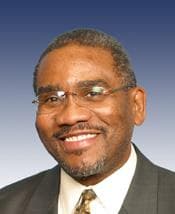
- Gregory Meeks
- Cosponsors
- - 8 - 1
- Introduced
- In Committee
A House resolution is the House speaking for itself: stating a position, honouring someone, or setting its own rules. Adopting it is the whole process. Once the House agrees to it, it is officially the House's word; it is not a law, so the Senate and the President have no part in it.
What this bill would do
This resolution directs the Speaker of the House to start or join civil lawsuits against the President or executive branch officials. These actions would target officials who fail to act according to their constitutional and legal duties. Specifically, the litigation focuses on ongoing hostilities reported on March 2, 2026. It also addresses the termination of hostilities after 60 days and the removal of United States Armed Forces from hostilities against the Islamic Republic of Iran. The House General Counsel would represent the House in these legal matters.
Yes· 3 of 4
Does this reduce what is spent on the military?+5
The resolution seeks to enforce the removal of United States Armed Forces from hostilities against Iran, which would reduce active military engagement.
Does this make what the government does easier for the public to see?+4
The resolution seeks to hold the executive branch accountable to its constitutional and legal duties through public legal actions.
Does this strengthen ties with allied countries?+3
By enforcing the termination of hostilities with Iran, the resolution may help stabilize international relations.
The opposite
Does this give the federal government more power?-4
The resolution empowers the legislative branch to challenge executive branch actions through civil litigation.
Who it would affect, and how
Potential Positive Impacts for People
-
Enforcement of War Powers: The resolution seeks to ensure the President follows the War Powers Resolution regarding reported hostilities (Section 1, subsection 1 and 2). This could benefit the country by ensuring executive actions remain within the bounds of the law.
-
Compliance with Congressional Direction: The resolution aims to enforce the implementation of H. Con. Res. 86, which directs the President to remove Armed Forces from hostilities against the Islamic Republic of Iran (Section 1, subsection 3). This could lead to the conclusion of specific military hostilities as directed by a concurrent resolution.
Potential Negative Impacts for People
- No negative impacts are explicitly stated in the text.
Groups and Interests Ranking
Every group the model scored this bill for, from -10 to +10. Hover a score for the reason it gave.
- National Security And Foreign Policy
- Reduces Military Spending+5Improves International Alliances+3
- Demographic And Interest Groups
- Good For Veterans+3
- Governance And Ideology
- Improves Government Transparency+4Increases Federal Power-4
- 7/30/2026
- 3 Cosponsors added.
- 7/23/2026
- Submitted in House
- Referred to the Committee on Rules, and in addition to the Committee on House Administration, for a period to be subsequently determined by the Speaker, in each case for consideration of such provisions as fall within the jurisdiction of the committee concerned.
- 6 Cosponsors added.
 Gabe Amo
Democrat · Rhode Island
 Yassamin Ansari
Democrat · Arizona
 Joaquin Castro
Democrat · Texas
 Jason Crow
Democrat · Colorado
 Pramila Jayapal
Democrat · Washington
 Ro Khanna
Democrat · California
 John Larson
Democrat · Connecticut
 James McGovern
Democrat · Massachusetts
 Thomas Massie
Republican · Kentucky