Bill · H.Res. 1309· House(119-HRES-1309)
Impeaching John Glover Roberts, Jr., Chief Justice of the United States for high crimes and misdemeanors.
- Introduced
- 5/21/2026
- Last activity
- 5/21/2026 — Referred to the House Committee on the Judiciary.
- Sponsored by
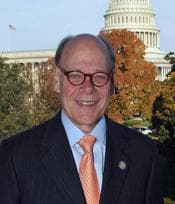
- Steve Cohen
- Cosponsors
- None
- Introduced
- In Committee
A House resolution is the House speaking for itself: stating a position, honouring someone, or setting its own rules. Adopting it is the whole process. Once the House agrees to it, it is officially the House's word; it is not a law, so the Senate and the President have no part in it.
What this bill would do
This resolution seeks to impeach Chief Justice John Glover Roberts, Jr. for high crimes and misdemeanors. The document outlines several articles of impeachment involving the politicization of the Court and the failure of judicial stewardship. It alleges that the Chief Justice has violated his constitutional oath regarding the protection of the Constitution and the administration of justice. Specific allegations include the entrenchment of minority rule through redistricting and the favoring of wealth in campaign finance. Additionally, the resolution cites rulings that grant presidential immunity and the use of an arbitrary emergency docket. Finally, it addresses a failure to recuse amidst potential conflicts of interest regarding his spouse's professional work.
Yes· 3 of 10
Does this protect the right to vote?+7
The resolution aims to protect the political rights of citizens from partisan redistricting.
Does this make elections run better?+6
The resolution seeks to restore impartial administration of the electoral process by the Supreme Court.
Does this narrow racial gaps in how people are treated?+6
The resolution challenges judicial decisions that dismantled majority-minority district protections.
The opposite· 3 of 4
Would the very wealthiest people be better off under this?-7
The resolution targets the entrenchment of power held by wealthy corporations and individuals.
Would billionaires be better off under this?-7
The resolution aims to diminish the influence of those who benefit from current campaign finance rulings.
Would people with substantial wealth be better off under this?-6
The resolution seeks to limit the political influence consolidated by the very wealthy.
Who it would affect, and how
Potential Positive Impacts for People
-
Protection of Electoral Integrity: The resolution suggests that holding the Chief Justice accountable could prevent the Court from being used as a political instrument to favor specific political parties during elections. (Article I)
-
Preservation of Voting Rights: By challenging decisions that dismantled protections for majority-minority districts, the resolution aims to protect the political rights of citizens and ensure government remains responsive to the will of the electorate. (Article II)
-
Equality in Governance: The resolution argues against a system that privileges wealthy individuals and corporations, aiming to restore the premise that every citizen can equally participate in governance. (Article III)
-
Restoration of Checks and Balances: The challenge to presidential immunity seeks to ensure that elected officials are held accountable to the criminal law and the principle of equal protection. (Article IV)
-
Increased Judicial Transparency: Addressing the use of the emergency docket could lead to more meaningful analysis and guidance from the Court, providing better due process for those involved in legal matters. (Article V)
-
Enhanced Judicial Integrity: Requiring recusal in cases of potential financial conflicts of interest aims to protect the institutional integrity of the Supreme Court. (Article VI)
Potential Negative Impacts for People
-
Impact on Redistricting Stability: The text notes that Court decisions regarding redistricting can prompt states to engage in mid-decade redistricting, which occurred in Louisiana when more than 100,000 voters had already cast ballots. (Article I)
-
Erosion of Political Rights: The resolution alleges that certain judicial decisions have empowered state legislatures to draw districts that discriminate against minority viewpoints and communities. (Article II)
-
Consolidation of Wealthy Power: The resolution states that current campaign finance decisions have entrenched a system that favors and consolidates power in the hands of the wealthy and corporations. (Article III)
-
Reduced Accountability for Executives: The ruling on presidential immunity is described as placing former Presidents out of the reach of legislative and judicial authority, including for criminal bribery charges. (Article IV)
-
Legal Uncertainty for Lower Courts: The expanded use of the emergency docket has resulted in orders that lack explanation, leaving lower courts struggling to apply them. (Article V)
-
Potential for Bias: The financial arrangements involving the Chief Justice's spouse and law firms with matters before the Court create questions regarding bias and the prospect of unfair advantages. (Article VI)
Groups and Interests Ranking
Every group the model scored this bill for, from -10 to +10. Hover a score for the reason it gave.
- Governance And Ideology
- Improves Electoral Process+6Improves Due Process+5Improves Government Transparency+5Increases Federal Power+4
- Social Issues And Justice
- Improves Voting Rights+7Improves Racial Equity+6
- Demographic And Interest Groups
- Good For African Americans+6Good For Low Income Households+5Good For Urban Residents+5Good For Billionaires-7Good For Ultra High Net Worth Individuals-7Good For High Net Worth Individuals-6Good For High Income Households-5
- Economy And Finance
- Improves Consumer Protection+5
- 5/21/2026
- Submitted in House
- Referred to the House Committee on the Judiciary.