Bill · H.Res. 1033· House(119-HRES-1033)
Expressing support for the designation of the week beginning February 2, 2026, as "National Tribal Colleges and Universities Week".
- Introduced
- 2/3/2026
- Last activity
- 2/3/2026 — Referred to the House Committee on Oversight and Government Reform.
- Sponsored by
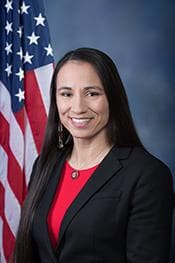
- Sharice Davids
- Cosponsors
- - 0 - 1
- Introduced
- In Committee
A House resolution is the House speaking for itself: stating a position, honouring someone, or setting its own rules. Adopting it is the whole process. Once the House agrees to it, it is officially the House's word; it is not a law, so the Senate and the President have no part in it.
What this bill would do
This resolution expresses support for designating the week of February 2, 2026, as "National Tribal Colleges and Universities Week." It highlights that there are 34 Tribal Colleges and Universities operating on more than 90 campuses across 16 States. These institutions serve students from over 250 federally recognized Indian Tribes and provide access to postsecondary education. The resolution notes the economic contributions of these institutions and their role in preparing students for the global workforce. Finally, it calls on the American people and interested groups to observe the week with appropriate activities and programs.
Yes· 3 of 8
Would Native Americans be better off under this?+2
The resolution expresses support for institutions that serve students from over 250 federally recognized Indian Tribes.
Does this narrow racial gaps in how people are treated?+2
The resolution highlights the role of Tribal Colleges and Universities in enhancing Indian communities through culture and education.
Would people in their twenties and thirties be better off under this?+1
The resolution promotes postsecondary educational opportunities that prepare students for the global workforce.
The opposite
No question was scored the opposite.
Who it would affect, and how
Potential Positive Impacts for People
-
Cultural Enrichment: Tribal Colleges and Universities offer knowledge and skills grounded in cultural traditions and values, including Native languages, which can enhance Indian communities and enrich the United States (Resolution preamble).
-
Educational Access: These institutions provide high-quality postsecondary educational opportunities for American Indians, Alaska Natives, and individuals living in isolated and economically depressed areas (Resolution preamble).
-
Economic Contributions: In fiscal years 2022 through 2023, alumni of these institutions contributed $3,800,000,000 to the national economy, which is equivalent to supporting 40,732 jobs (Resolution preamble).
-
Individual Financial Gain: For every $1.00 spent on Tribal Colleges and Universities, students gain $7.50 in lifetime earnings (Resolution preamble).
-
Societal and Taxpayer Benefits: For every $1.00 spent, taxpayers gain $1.60 in added tax revenue and public sector savings, while society gains $4.80 in added income and social savings (Resolution preamble).
Potential Negative Impacts for People
- No negative impacts are explicitly mentioned in the text of this resolution.
Groups and Interests Ranking
Every group the model scored this bill for, from -10 to +10. Hover a score for the reason it gave.
- Demographic And Interest Groups
- Good For Native Americans+2Good For Low Income Households+1Good For Students+1Good For Young Adults+1
- Social Issues And Justice
- Improves Racial Equity+2Improves Poverty Reduction+1
- Economy And Finance
- Increases Job Creation+1
- Education And Technology
- Improves College Affordability+1
- 2/3/2026
- Submitted in House
- Referred to the House Committee on Oversight and Government Reform.
- 1 Cosponsor added.
 Tom Cole
Republican · Oklahoma