Bill · H.Res. 1028· House(119-HRES-1028)
Expressing the sense of the House of Representatives that the United States must act urgently to end the political and economic dominance of billionaire oligarchs, halt the corporate subsidies and tax advantages that fortify their power, and reinvest in the needs of the American people to defend democracy from authoritarianism.
- Introduced
- 1/30/2026
- Last activity
- 5/20/2026 — Referred to the Subcommittee on Nutrition and Foreign Agriculture.
- Sponsored by
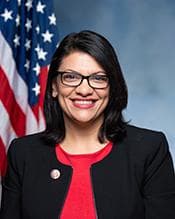
- Rashida Tlaib
- Cosponsors
- - 7 - 0
- Introduced
- In Committee
A House resolution is the House speaking for itself: stating a position, honouring someone, or setting its own rules. Adopting it is the whole process. Once the House agrees to it, it is officially the House's word; it is not a law, so the Senate and the President have no part in it.
What this bill would do
This resolution expresses the sense of the House of Representatives regarding the need to end the political and economic dominance of billionaire oligarchs. It calls for halting corporate subsidies and tax advantages that strengthen their power. The text argues for reinvesting in the needs of the American people to protect democracy from authoritarianism. It suggests breaking up economic and political concentrations of power, such as monopolies in media and tech. Additionally, it calls for increased taxes on the ultra-wealthy to fund social programs. Ultimately, the resolution seeks to shift power away from wealthy elites and back to the people.
Yes· 3 of 26
Would union members be better off under this?+9
The resolution explicitly calls for the dramatic expansion of unions.
Does this raise taxes on the highest earners?+9
The text explicitly calls for increasing tax rates for the ultra-rich and enacting a wealth tax.
Would households on low incomes be better off under this?+8
The resolution prioritizes funding for basic needs like food, housing, and healthcare.
The opposite
Would business owners be better off under this?-6
The bill seeks to break up monopolies and increase taxes on large corporations.
Does this put more into space exploration?-5
The resolution seeks to move control of space exploration from private oligarchs to public servants.
Who it would affect, and how
Potential Positive Impacts for People
-
Protection of Democracy and Individual Liberties: The resolution states that defunding oligarchs will defend American democracy and safeguard individual liberties. (Section 1)
-
Fairer Competition and Accountability: By preventing the President from rewarding corporations that engage in corruption, fail to compete fairly, or break labor and environmental laws, the government can ensure fairer market practices. (Section 2)
-
Increased Political Voice for Workers: Implementing publicly financed elections with small dollar contributions is intended to stop corporate spending from drowning out the voices and votes of working people. (Section 3)
-
National Security and Public Control: Ensuring that critical functions like artificial intelligence, cloud computing, and space exploration are controlled by public servants rather than oligarchs. (Section 4)
-
Reduction of Inequality and Increased Social Support: Increasing taxes on corporations and the ultra-wealthy to fund universal health care, affordable housing, debt-free education, and climate resilience aims to reduce economic inequality. (Section 5)
-
Support for Working People: Expanding unions is intended to ensure ordinary Americans benefit from economic growth and have a way to make collective demands on the political system. (Section 7)
-
Promotion of Diverse Ownership: Exploring noncorporate ownership, such as cooperatives and community ownership, can help displace corporate power. (Section 8)
-
Raising Standards of Living: Using public money to fund programs for affordable health care, housing, food, and education is intended to help people survive and thrive. (Section 9)
Potential Negative Impacts for People
-
Impact on Government Contracts: The resolution calls for the President not to award lucrative contracts, loans, or grants to certain corporations, which could affect how those businesses operate. (Section 2)
-
Changes to Economic Structures: The call to break up monopolies in media, finance, and tech sectors could lead to significant changes in how those industries function. (Section 4)
-
Increased Tax Burdens on Wealthy and Corporations: The proposal to increase tax rates for corporations and the ultra-wealthy and enact a wealth tax would result in higher taxes for these groups. (Section 5)
Groups and Interests Ranking
Every group the model scored this bill for, from -10 to +10. Hover a score for the reason it gave.
- Demographic And Interest Groups
- Good For Union Workers+9Good For Low Income Households+8Good For Students+8Good For Young Adults+6Good For Children+5Good For Middle Class Households+5Good For African Americans+4Good For Women+4Good For Business Owners-6
- Economy And Finance
- Increases Wealthy Taxes+9Increases Corporate Taxes+8Improves Union Protections+7Improves Economic Growth+5Improves Small Business Support+4
- Social Issues And Justice
- Improves Affordable Housing+8Improves Poverty Reduction+7Improves Racial Equity+3
- Environment Energy And Infrastructure
- Improves Environmental Protections+7Increases Renewable Energy Investment+6Improves Public Transit+4
- Healthcare
- Improves Healthcare Access+8Increases Medicaid Funding+5
- Governance And Ideology
- Improves Electoral Process+8Improves Privacy Rights+4
- Education And Technology
- Increases Big Tech Regulation+8Improves College Affordability+7Increases Space Exploration-5
- National Security And Foreign Policy
- Improves Veterans Benefits+2
- 5/20/2026
- Referred to the Subcommittee on Nutrition and Foreign Agriculture.
- 3/4/2026
- 1 Cosponsor added.
- 2/25/2026
- 1 Cosponsor added.
- 2/4/2026
- 1 Cosponsor added.
- 2/2/2026
- 1 Cosponsor added.
- 1/30/2026
- Submitted in House
- Referred to the Committee on the Judiciary, and in addition to the Committees on House Administration, Ways and Means, Education and Workforce, Energy and Commerce, Financial Services, and Agriculture, for a period to be subsequently determined by the Speaker, in each case for consideration of such provisions as fall within the jurisdiction of the committee concerned.
- 3 Cosponsors added.
 Jesús García
Democrat · Illinois
 Val Hoyle
Democrat · Oregon
 Pramila Jayapal
Democrat · Washington
 Summer Lee
Democrat · Pennsylvania
 Ilhan Omar
Democrat · Minnesota
 Delia Ramirez
Democrat · Illinois
 Janice Schakowsky
Democrat · Illinois