Bill · H.R. 9934· House(119-HR-9934)
Housing BOOM Act
- Introduced
- 7/23/2026
- Last activity
- 7/23/2026 — Referred to the Committee on Financial Services, and in addition to the Committees on Ways and Means, and Energy and Commerce, for a period to be subsequently determined by the Speaker, in each case for consideration of such provisions as fall within the jurisdiction of the committee concerned.
- Sponsored by
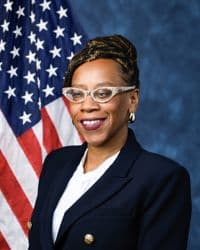
- Lateefah Simon
- Cosponsors
- None
- Introduced
- In Committee
What this bill would do
This bill aims to increase the housing supply in the United States and address homelessness through various funding programs and grants. It establishes funds and block grants for building rental housing, converting structures into emergency shelters or affordable housing, and supporting unhoused individuals with mental and behavioral health services. The legislation increases funding for existing programs like the Community Development Block Grant Program, the HOME Investments Partnership Program, and USDA rural development housing. Additionally, it creates new offices within the Department of Housing and Urban Development, including the Office of Eviction Prevention and the U.S. Interagency Council on Housing Affordability and Preservation. Finally, the bill includes provisions requiring prevailing wages for laborers on projects receiving assistance from the newly funded programs.
Yes· 3 of 43
Would households on low incomes be better off under this?+10
Provides 1 million new vouchers, homelessness services, and eviction prevention.
Does this make housing cost less?+10
Comprehensive effort to increase housing supply through loans, grants, tax credits, and 1 million new vouchers.
Is this likely to reduce homelessness?+10
Directly targets homelessness through emergency shelter conversions and the Center for Unhoused Individuals.
The opposite
Does this reduce what the federal government spends?-8
Significantly increases federal spending across multiple housing and health grant programs.
Does this reduce what the federal government owes?-5
Authorizes billions in new spending over five years, which increases the national deficit if not offset.
Does this make the government pay for what it commits to?-5
The bill focuses on large-scale spending authorizations without specifying funding sources.
Who it would affect, and how
Potential Positive Impacts for People
-
Increased Housing Supply and Construction Loans: Section 102 establishes the Middle Income Housing Construction Loan Fund to provide low-interest loans for rental housing construction and adaptive reuse, targeting households earning between 60 and 120 percent of the area median income. This helps create more housing options for moderate-income families who do not qualify for deeply subsidized housing.
-
Workforce Housing Grants: Section 103 establishes a Workforce Housing Block Grant Program providing $5,000,000,000 for each of fiscal years 2026 through 2030 to support the development of workforce rental housing. This program prioritizes high-cost urban regions, rural communities, rapidly growing suburban areas, and locations near employment centers and transit.
-
Eviction Prevention and Tenant Support: Section 303 establishes the Office of Eviction Prevention within the Department of Housing and Urban Development to prevent evictions, protect tenants from illegal or court-ordered evictions, and administer the Eviction Protection Grant Program. This provides vital advocacy, education, and legal resources to keep people in their homes.
-
Behavioral Health Services for Unhoused Individuals: Section 202 adds a Center for Unhoused Individuals and establishes mental and behavioral health response grants to expand access to substance use disorder treatment, overdose prevention, and care coordination for unhoused individuals. This directly addresses the health and stability needs of homeless populations.
-
Shelter and Office Conversions: Section 113 provides grants to convert hotels, motels, and vacant properties into emergency, temporary, and transitional housing. Additionally, Section 114 establishes the Office to Residential Affordable Housing Conversion Program to convert unused State and local government buildings into affordable residential rental projects.
Potential Negative Impacts for People
- Prevailing Wage Cost Burdens: Multiple sections (such as Section 102(e), Section 103(f), Section 104(d), and Section 113(e)) require contractors and subcontractors to pay prevailing wages under the Davis-Act for construction, alteration, or repair work on assisted projects. While this benefits laborers, it may increase overall construction costs, potentially reducing the total number of housing units that can be built with the appropriated funds.
Groups and Interests Ranking
Every group the model scored this bill for, from -10 to +10. Hover a score for the reason it gave.
- Demographic And Interest Groups
- Good For Low Income Households+10Good For People With Disabilities+9Good For Middle Class Households+8Good For Retirees+8Good For Seniors+8Good For Union Workers+8Good For Urban Residents+8Good For African Americans+7Good For Asian Americans+7Good For Hispanic Americans+7Good For Middle Aged+7Good For Native Americans+7Good For Rural Residents+7Good For Young Adults+7Good For Children+6Good For Immigrants+6Good For Women+6Good For Men+5Good For Students+5Good For White Americans+5Good For Business Owners+4
- Social Issues And Justice
- Improves Affordable Housing+10Reduces Homelessness+10Improves Poverty Reduction+8Improves Disability Rights+7Improves Racial Equity+6Improves Childcare Affordability+5Improves Policing Reform+2
- Healthcare
- Improves Mental Health Access+9Improves Opioid Crisis Response+8Improves Healthcare Access+7
- Environment Energy And Infrastructure
- Improves Disaster Relief And F E M A+6Improves Rural Development+6Improves Public Transit+3
- Governance And Ideology
- Improves Due Process+5Increases Federal Power+5Improves Government Transparency+4
- Economy And Finance
- Increases Job Creation+7Improves Consumer Protection+6Improves Union Protections+6Improves Economic Growth+5Improves Small Business Support+3Reduces Inflation+2Reduces Government Spending-8Improves Fiscal Responsibility-5Reduces National Debt-5
- 7/23/2026
- Referred to the Committee on Financial Services, and in addition to the Committees on Ways and Means, and Energy and Commerce, for a period to be subsequently determined by the Speaker, in each case for consideration of such provisions as fall within the jurisdiction of the committee concerned.
- Introduced in House
One bill Congress.gov lists as related to this one — companions in the other chamber, earlier versions, and bills this one absorbed or was folded into.