Bill · H.R. 993· House(119-HR-993)
Emerging Innovative Border Technologies Act
- Introduced
- 2/5/2025
- Last activity
- 3/11/2025 — Received in the Senate and Read twice and referred to the Committee on Homeland Security and Governmental Affairs.
- Sponsored by
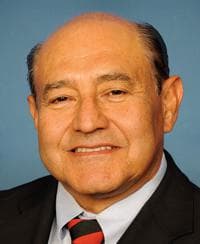
- J. Correa
- Cosponsors
- - 1 - 1
- Introduced
- Passed House
- In Senate committee
What this bill would do
The Emerging Innovative Border Technologies Act requires the Secretary of Homeland Security to create a plan for using new technologies to improve border security. This plan must identify and deploy advanced tools like artificial intelligence, machine learning, and various sensors to close capability gaps. The Secretary must submit this plan to specific House and Senate committees within 180 days. The plan must also include details on scaling existing programs and coordinating with the private sector. Additionally, the Act authorizes the Commissioner of CBP to maintain Innovation Teams to research and adapt commercial technologies. These teams are tasked with addressing urgent mission needs and assessing potential outcomes of new tools.
Yes· 3 of 7
Does this tighten control of the border?+7
The bill mandates a plan to deploy advanced technologies to close capability gaps in border security.
Does this give the government more power to monitor people inside the country?+5
The bill authorizes advanced surveillance technologies like AI, sensors, and unmanned aerial systems for border security.
Does this make it easier to run a small business?+3
The bill encourages collaboration with small and disadvantaged businesses for technology development.
The opposite
Does this protect people from being watched or searched?-3
The increased use of advanced surveillance technologies poses a potential risk to the privacy of border community residents.
Would immigrants be better off under this?-2
Increased surveillance technologies at the border may negatively impact the privacy and security of immigrant-heavy communities.
Does this give people more control over their personal data?-2
The bill requires assessments of privacy impacts, implying a potential risk to privacy for border communities.
What Congress actually voted on
One recorded vote has been taken on this bill.
- The House: a fast-track vote, needing two-thirds to passPassed 406–9
The House sets aside its normal procedure to move quickly: no amendments, little debate, and a two-thirds bar instead of a simple majority. It is used for measures expected to be uncontroversial, so a bill that fails here failed despite broad expectations that it would not.
03/10/2025 · Roll call 65 · recorded as “On Motion to Suspend the Rules and Pass”
Who it would affect, and how
Potential Positive Impacts for People
-
Enhanced Border Security Operations: The plan aims to use advanced technologies such as artificial intelligence, machine-learning, automation, and various sensors to enhance or address capability gaps in border security (Section 2(a)).
-
Increased Collaboration with Diverse Entities: The plan includes efforts to increase communication and collaboration with the private sector, small and disadvantaged businesses, university centers of excellence, and Federal laboratories (Section 2(b)(10)(D)).
-
Modernization of Surveillance and Detection: The Act identifies several technological advancements intended to improve capabilities, including unmanned aerial systems, tunnel detection technology, and nonintrusive inspection technology (Section 2(b)(12)).
Potential Negative Impacts for People
-
Impact on Border Communities: The bill requires an assessment of how security-related technologies might impact the privacy and security of people living in border communities (Section 2(b)(8)).
-
Assessment of Negative Consequences: The Commissioner of CBP is tasked with assessing potential negative consequences that may result from introducing emerging or advanced technologies (Section 2(c)(1)).
Groups and Interests Ranking
Every group the model scored this bill for, from -10 to +10. Hover a score for the reason it gave.
- Social Issues And Justice
- Improves Border Security+7
- National Security And Foreign Policy
- Increases Domestic Surveillance+5
- Economy And Finance
- Improves Small Business Support+3
- Governance And Ideology
- Increases Federal Power+3Improves Government Transparency+2Improves Privacy Rights-3
- Demographic And Interest Groups
- Good For Business Owners+3Good For Immigrants-2
- Education And Technology
- Increases Scientific Research Funding+2Improves Data Privacy-2
- 3/11/2025
- Received in the Senate and Read twice and referred to the Committee on Homeland Security and Governmental Affairs.
- 3/10/2025
- Motion to reconsider laid on the table Agreed to without objection.
- Passed/agreed to in House: On motion to suspend the rules and pass the bill Agreed to by the Yeas and Nays: (2/3 required): 406 - 9 (Roll no. 65). (text: CR H1052-1053)
- On motion to suspend the rules and pass the bill Agreed to by the Yeas and Nays: (2/3 required): 406 - 9 (Roll no. 65). (text: CR H1052-1053)
- Considered as unfinished business. (consideration: CR H1059-1060)
- At the conclusion of debate, the Yeas and Nays were demanded and ordered. Pursuant to the provisions of clause 8, rule XX, the Chair announced that further proceedings on the motion would be postponed.
- DEBATE - The House proceeded with forty minutes of debate on H.R. 993.
- Considered under suspension of the rules. (consideration: CR H1052-1053)
- Mr. Green (TN) moved to suspend the rules and pass the bill.
- 1 Cosponsor added.
- 2/5/2025
- Referred to the House Committee on Homeland Security.
- Referred to the Subcommittee on Border Security and Enforcement.
- 1 Cosponsor added.
- Introduced in House
 Laura Gillen
Democrat · New York
 Morgan Luttrell
Republican · Texas