Bill · H.R. 9912· House(119-HR-9912)
Industrial Bank for American Manufacturing Act of 2026
- Introduced
- 7/23/2026
- Last activity
- 7/23/2026 — Referred to the House Committee on Financial Services.
- Sponsored by
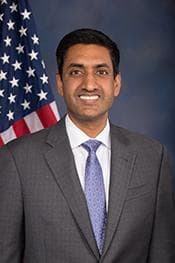
- Ro Khanna
- Cosponsors
- - 2 - 0
- Introduced
- In Committee
What this bill would do
The Industrial Bank for American Manufacturing Act of 2026 establishes a fund within the Department of Commerce to support U.S. manufacturing. The fund is financed by up to $15,000,000,000 annually, derived largely from tariffs on articles from the People's Republic of China. The Secretary of Commerce can use these funds to provide loans, equity investments, or grants to manufacturers to expand or modernize critical and emerging technologies. To receive assistance, manufacturers must meet specific eligibility and labor requirements, including prevailing wage and apprenticeship mandates. The program aims to bolster national security and industrial capacity through strategic investments. The authority to obligate these funds terminates 10 years after the Act's enactment.
Yes· 3 of 13
Does this make it easier to run a small business?+7
The bill sets aside 10 percent of the total annual fund specifically for small business manufacturers.
Is this likely to create jobs?+6
The fund provides capital specifically to help manufacturers expand operations and modernize technologies.
Does this strengthen the rights of workers to organise?+5
The bill mandates prevailing wages and apprenticeship requirements for construction and repair work.
The opposite
Does this raise the taxes companies pay?-2
The bill relies on revenue from tariffs which can function as an indirect tax on imported goods used by companies.
Does this make college cost less?-1
The bill focuses on vocational and on-the-job training rather than higher education affordability.
Does this increase the pay, pensions or support veterans receive?-1
The bill does not directly provide benefits to veterans, though it focuses on industrial security.
Who it would affect, and how
Potential Positive Impacts for People
-
Support for Technological Expansion: The Secretary of Commerce can provide direct loans, equity investments, or grants to help manufacturers expand and modernize operations related to critical and emerging technologies (Section 2(c)).
-
Job Training and Employment: Manufacturers receiving assistance must spend at least 1 percent of the award on employment and training activities, such as occupational skills or on-the-job training (Section 3(b)(3)).
-
Support for Local Workers: Manufacturers are required to spend at least 0.5 percent of the award on supportive services for their employees (Section 3(b)(4)).
-
Wage Protections: The bill requires that laborers and mechanics involved in the construction, alteration, or repair of qualified facilities be paid wages at rates not less than the prevailing rates for their locality (Section 4(a)(1)).
-
Apprenticeship Opportunities: The act mandates that a specific percentage of total labor hours for facility construction be performed by qualified apprentices (Section 4(b)(1)).
-
Prioritization of Struggling Areas: The Secretary is directed to prioritize awards to manufacturers located in areas that have experienced at least a 25 percent reduction in manufacturing employment between 2000 and 2023 (Section 3(d)(1)(C)).
-
Support for Small Businesses: The bill sets aside 10 percent of the total annual fund for covered manufacturers that are small business concerns (Section 3(d)(2)).
Potential Negative Impacts for People
-
Financial Penalties for Labor Violations: Manufacturers that fail to meet prevailing wage requirements must pay the difference in wages plus a penalty of $5,000 per laborer or mechanic, which increases to $10,000 for intentional disregard (Section 4(a)(2)).
-
Apprenticeship Penalties: Manufacturers that fail to meet apprenticeship labor hour requirements may be required to pay a penalty of $50 per labor hour, which increases to $500 for intentional disregard (Section 4(b)(1) and (4)(C)).
-
Strict Eligibility Requirements: To be eligible, manufacturers must certify they have no outstanding tax liabilities, pending civil or criminal actions, or disputes under adjudication by the National Labor Relations Board (Section 3(a)(1)).
-
Limitations on Use of Funds: Manufacturers receiving assistance are prohibited from using those funds to pay dividends or repurchase shares of their own company (Section 3(b)(1)(A)).
Groups and Interests Ranking
Every group the model scored this bill for, from -10 to +10. Hover a score for the reason it gave.
- Economy And Finance
- Improves Small Business Support+7Increases Job Creation+6Improves Economic Growth+5Improves Union Protections+5Increases Corporate Taxes-2
- Demographic And Interest Groups
- Good For Business Owners+5Good For Union Workers+5Good For Young Adults+4Good For Low Income Households+3Good For Rural Residents+3
- Education And Technology
- Increases Scientific Research Funding+5Improves College Affordability-1
- Governance And Ideology
- Improves Government Transparency+4
- Environment Energy And Infrastructure
- Reduces Carbon Emissions+3
- Social Issues And Justice
- Improves Poverty Reduction+2
- National Security And Foreign Policy
- Improves Veterans Benefits-1
- 7/23/2026
- Referred to the House Committee on Financial Services.
- 2 Cosponsors added.
- Introduced in House
 Debbie Dingell
Democrat · Michigan
 Thomas Suozzi
Democrat · New York