Bill · H.R. 9909· House(119-HR-9909)
Small Unmanned Aircraft Systems Operational Test, Evaluation, and Training Corridor Act
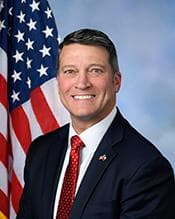
- Introduced
- 7/23/2026
- Last activity
- 7/23/2026 — Referred to the House Committee on Armed Services.
- Sponsored by
- Ronny Jackson
- Cosponsors
- - 7 - 1
- Introduced
- In Committee
What this bill would do
This bill, known as the "Small Unmanned Aircraft Systems Operational Test, Evaluation, and Training Corridor Act," directs the Secretary of Defense to create test and training corridors within the national airspace system. These corridors are intended for the development and training of small unmanned aircraft systems and counter-unmanned aircraft capabilities. The Secretary is authorized to build new facilities or use existing Department of Defense facilities to support these functions. The bill outlines various research, development, and training objectives, including the use of kinetic and nonkinetic payloads. Additionally, the Secretary must identify potential locations, assess existing resources, and identify any legal or regulatory impediments. Finally, the Secretary must notify congressional defense committees once a corridor is established.
Yes· 3 of 4
Does this better protect the country from computer attacks?+5
The bill supports the development of drone-versus-drone capabilities and electronic warfare capabilities which are essential for modern defensive operations.
Does this put more money into scientific research?+4
The bill directs the Secretary of Defense to enable research, development, testing, and evaluation of drone-related technologies.
Does this put more money into stopping terrorism?+3
The bill enhances counter-unmanned aircraft system capabilities which are critical for defending against unauthorized drone incursions.
The opposite
No question was scored the opposite.
Who it would affect, and how
Potential Positive Impacts for People
-
Advanced Defense Capabilities: The establishment of these corridors allows for the research and development of various technologies, such as autonomy software, sensors, and communications for unmanned aircraft (Section 2(c)(1)). It also covers the development of counter-unmanned aircraft capabilities like high power microwave and high energy laser systems (Section 2(c)(2)).
-
Improved Weapon Systems: The bill aims to support the development of small to medium caliber ammunition, low collateral damage weapons, and drone-versus-drone capabilities (Section 2(c)(3)).
-
Faster Deployment of Technology: The corridors are intended to help reduce the time it takes to get lethal and non-lethal drone-enabled munitions and payload capabilities into the field (Section 2(c)(5)).
-
Increased Efficiency through Standardization: The bill seeks to accelerate the integration of modular payloads onto various platforms and standardize the interfaces between payloads and platforms (Section 2(c)(4) and Section 2(c)(6)).
Potential Negative Impacts for People
-
Increased Military Construction and Personnel Costs: The Secretary is tasked with identifying the additional resources required for these corridors, which includes military construction costs as well as personnel and manning costs (Section 2(d)(3)).
-
Potential Regulatory or Policy Obstacles: The bill identifies that there may be interagency, legal, regulatory, or policy impediments that could impact the implementation of testing and training activities, particularly regarding electronic warfare, directed energy, or GPS jamming and spoofing (Section 2(d)(5)).
Groups and Interests Ranking
Every group the model scored this bill for, from -10 to +10. Hover a score for the reason it gave.
- National Security And Foreign Policy
- Improves Cybersecurity Defense+5Increases Counter Terrorism Funding+3
- Education And Technology
- Increases Scientific Research Funding+4
- Demographic And Interest Groups
- Good For Veterans+2
- 8/24/2026
- 2 Cosponsors added.
- 8/13/2026
- 1 Cosponsor added.
- 7/27/2026
- 1 Cosponsor added.
- 7/23/2026
- Referred to the House Committee on Armed Services.
- 4 Cosponsors added.
- Introduced in House
One bill Congress.gov lists as related to this one — companions in the other chamber, earlier versions, and bills this one absorbed or was folded into.
 Tom Barrett
Republican · Michigan
 Michael Guest
Republican · Mississippi
 Richard Hudson
Republican · North Carolina
 Cory Mills
Republican · Florida
 Richard McCormick
Republican · Georgia
 Mark Messmer
Republican · Indiana
 John McGuire
Republican · Virginia
 Eugene Vindman
Democrat · Virginia