Bill · H.R. 9879· House(119-HR-9879)
Super Pay-As-You-Go Act of 2026
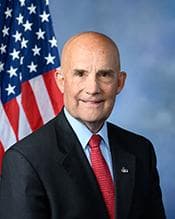
- Introduced
- 7/22/2026
- Last activity
- 7/22/2026 — Referred to the Committee on the Budget, and in addition to the Committee on Rules, for a period to be subsequently determined by the Speaker, in each case for consideration of such provisions as fall within the jurisdiction of the committee concerned.
- Sponsored by
- Keith Self
- Cosponsors
- None
- Introduced
- In Committee
What this bill would do
The "Super Pay-As-You-Go Act of 2026" aims to amend the Statutory Pay-As-You-Go Act of 2010. It introduces a "Super PAYGO" requirement where new legislation must produce savings that are at least twice the total budgetary cost of the new spending or revenue reductions. The bill also implements stricter rules for emergency designations, requiring them to be sudden, urgent, unforeseen, temporary, and necessary to address specific threats. Additionally, it changes how scorecards are maintained and increases the voting threshold required for waivers and appeals.
Yes· 3 of 5
Does this make the government pay for what it commits to?+7
The bill strengthens budgetary controls by requiring savings to exceed the cost of new spending by at least twice the amount.
Does this make what the government does easier for the public to see?+6
The bill requires the OMB to publish detailed fiscal data and Super PAYGO scorecard balances on a public website.
Does this reduce what the federal government owes?+5
The bill mandates that new spending must be offset by savings at a two-to-one ratio to reduce the accumulation of Federal debt.
The opposite
Is this likely to lift people out of poverty?-3
Stricter budgetary requirements may make it more difficult to pass legislation aimed at poverty reduction.
Would households on low incomes be better off under this?-3
The heightened difficulty in passing spending legislation could limit future social safety net investments.
Who it would affect, and how
Potential Positive Impacts for People
-
Enhanced Fiscal Sustainability: The bill seeks to promote long-term fiscal sustainability through transparent and enforceable budgetary controls (Section 2).
-
Increased Deficit Reduction: By requiring that total savings equal or exceed two times the total budgetary cost, the Act aims to strengthen and enhance budgetary savings (Section s 2 and 3A).
-
Reduced Federal Debt Accumulation: The Act aims to reduce the accumulation of Federal debt by requiring legislation to produce net deficit reduction (Section 2).
-
Greater Transparency: The Office of Management and Budget is required to publish a report on a publicly accessible website containing various fiscal data, including Super PAYGO scorecard balances and deficit reduction amounts (Section 8).
-
Stricter Emergency Oversight: The bill requires that any emergency designation be justified by the OMB in writing, explaining how it meets specific criteria such as being sudden, urgent, or necessary to address threats to life or national security (Section 5).
Potential Negative Impacts for People
-
Increased Difficulty in Passing Legislation: New legislation affecting direct spending or revenues must now meet a much higher standard of savings (two times the cost) to be considered compliant, which could impact the ability to pass various laws (Section 3A).
-
Higher Barriers for Emergency Spending: The bill imposes strict requirements for what can be called an "emergency," including that it must be sudden, urgent, unforeseen, temporary, and necessary to address a direct threat to life, public safety, national security, or significant property damage (Section 5).
-
Limits on Legislative Flexibility: To waive or modify the provisions of this Act, a higher voting threshold of two-thirds of the Members is required in both the Senate and the House (Section 5, Section 6A, and Section 6B).
-
Strict Restrictions on Legislative Vehicles: Legislation proposing to exclude budgetary effects or to waive certain provisions must now be handled as a separate bill or joint resolution that contains no other matter (Section 7, Section 7).
Groups and Interests Ranking
Every group the model scored this bill for, from -10 to +10. Hover a score for the reason it gave.
- Economy And Finance
- Improves Fiscal Responsibility+7Reduces Government Spending+5Reduces National Debt+5
- Governance And Ideology
- Improves Government Transparency+6
- Social Issues And Justice
- Improves Poverty Reduction-3
- Demographic And Interest Groups
- Good For High Income Households+2Good For Low Income Households-3
- 7/22/2026
- Referred to the Committee on the Budget, and in addition to the Committee on Rules, for a period to be subsequently determined by the Speaker, in each case for consideration of such provisions as fall within the jurisdiction of the committee concerned.
- Introduced in House