Bill · H.R. 9869· House(119-HR-9869)
FECA Modernization and Cost Containment Act of 2026
- Introduced
- 7/22/2026
- Last activity
- 7/22/2026 — Referred to the House Committee on Education and Workforce.
- Sponsored by
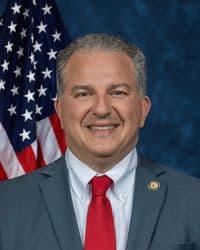
- Jimmy Patronis
- Cosponsors
- - 1 - 0
- Introduced
- In Committee
What this bill would do
The FECA Modernization and Cost Containment Act of 2026 aims to update the Federal Employees' Compensation Act to improve outcomes for injured workers and reduce costs and fraud. The bill requires federal employing agencies to contract with managed care networks (MCNs) to provide medical services, appliances, and supplies. It establishes standardized treatment protocols and a review board to monitor MCN compliance and provider performance. Additionally, the Secretary of Labor is authorized to use predictive analytics and artificial intelligence to identify potentially fraudulent claims. Federal agencies must submit transition plans to move toward this managed care model.
Yes· 3 of 5
Does this reduce what the federal government spends?+5
The bill aims to reduce federal compensation costs, which creates a burden on taxpayers.
Does this make the government pay for what it commits to?+5
By containing costs through managed care, the bill seeks more efficient use of federal funds.
Does this give the federal government more power?+3
The bill expands federal oversight of worker compensation through managed care networks and AI-driven fraud detection.
The opposite
Does this protect people from being watched or searched?-2
The use of predictive analytics and AI to monitor claims may impact privacy.
Who it would affect, and how
Potential Positive Impacts for People
-
Improved Clinical Outcomes and Recovery: The bill states that implementing industry best practices, such as employer-directed medical care and standardized treatment protocols, will improve clinical outcomes and accelerate employee recovery (Section 2, Finding 5).
-
Access to Second Opinions: If an employee disputes a diagnosis or treatment recommendation from a provider furnished by the managed care network, the network must provide a second opinion from a different provider (Section 3(b)(2)(B)).
-
Dispute Resolution System: The Secretary of Labor is tasked with establishing a system for reviewing disputes to ensure that employees receive their required services, appliances, and supplies in a timely manner (Section 3(b)(2)(C)).
-
Protections for Out-of-Network Needs: If a managed care network cannot provide the prescribed or recommended services, appliances, or supplies, the employee is permitted to select a provider (Section 3(b)(2)(A)).
-
Cost Containment for Taxpayers: The bill finds that federal compensation costs are currently significantly higher than the private sector, and seeks to reduce this burden on taxpayers (Section 2, Finding 2).
Potential Negative Impacts for People
-
Restriction of Care Choices: Except in medical emergencies, employees are required to seek care through a managed care network contracted by their employing agency (Section 3(a)(1)).
-
Potential for Increased Oversight and Monitoring: The Secretary of Labor may use predictive analytics and artificial intelligence to monitor and flag claims for potential fraud (Section 3(b)(6)).
Groups and Interests Ranking
Every group the model scored this bill for, from -10 to +10. Hover a score for the reason it gave.
- Economy And Finance
- Improves Fiscal Responsibility+5Reduces Government Spending+5
- Governance And Ideology
- Increases Federal Power+3Improves Due Process+2Improves Privacy Rights-2
- Healthcare
- Improves Healthcare Access+3
- 7/22/2026
- Referred to the House Committee on Education and Workforce.
- 1 Cosponsor added.
- Introduced in House
 Aaron Bean
Republican · Florida