Bill · H.R. 9862· House(119-HR-9862)
Responsible Artificial Intelligence for Veterans Act of 2026
- Introduced
- 7/22/2026
- Last activity
- 7/29/2026 — Referred to the Subcommittee on Oversight and Investigations.
- Sponsored by
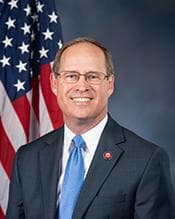
- Gregory Murphy
- Cosponsors
- - 1 - 0
- Introduced
- In Committee
What this bill would do
This bill requires the Secretary of Veterans Affairs to arrange an independent evaluation of artificial intelligence systems used by the Veterans Health Administration. A federally funded research and development center must conduct this review, prioritizing at least five systems that carry elevated risks or are deployed at scale. The evaluation will look at system integration, governance, performance, safety, veteran design, costs, transparency, and scalability. Within one year of the agreement, the center must submit a report detailing its findings, risks, and recommendations to the Secretary and congressional committees. The Secretary then has 120 days to respond with a corrective action plan to hold officials accountable. Finally, the Comptroller General must review this evaluation and action plan within 180 days.
Yes· 3 of 8
Would veterans be better off under this, taking everything together?+8
This bill directly benefits veterans by improving the safety, equity, and efficiency of AI-driven healthcare and benefits.
Does this help veterans get medical care?+7
The bill enhances veterans healthcare through independent evaluation of AI systems to ensure safety, reduce bias, and improve clinical efficiency.
Does this make what the government does easier for the public to see?+5
The bill increases transparency through mandatory reporting and public access to evaluation findings.
The opposite
No question was scored the opposite.
Who it would affect, and how
Potential Positive Impacts for People
-
Independent Safety Oversight: Section 2(a) requires an independent evaluation of artificial intelligence systems used in the Veterans Health Administration, prioritizing systems that present elevated clinical, operational, or patient safety risks. This is a positive step to help protect veterans from potential technological harms and errors.
-
Bias Mitigation and Fairness: Section 2(b)(3)(B) requires the evaluation to look at the presence of disparate performance across demographic groups and the mitigation of bias. This helps ensure that artificial intelligence tools treat all veterans fairly, regardless of their background.
-
Preserving Clinical Judgment: Section 2(b)(4)(B) and Section 2(b)(4)(C) examine safeguards ensuring that artificial intelligence functions only as a clinical decision-support tool, and that clinicians retain the authority and ability to override system outputs. This is good for patients because human doctors, not computers, remain fully in charge of medical decisions.
-
Holding Officials Accountable: Section 2(e)(2) requires the Secretary to submit a corrective action plan with assigned responsibilities, milestones, and deadlines in response to the evaluation. This holds our elected and appointed public officials directly accountable for fixing identified problems.
Potential Negative Impacts for People
- Potential Delays in Care Integration: Section 2(e)(1)(A)(iii) allows the independent evaluation to recommend the suspension of artificial intelligence deployment where warranted. While necessary for safety, suspending a system could potentially slow down technological rollouts or administrative workflows that some facilities rely upon.
Groups and Interests Ranking
Every group the model scored this bill for, from -10 to +10. Hover a score for the reason it gave.
- Governance And Ideology
- Improves Government Transparency+5Improves Privacy Rights+5
- Demographic And Interest Groups
- Good For Veterans+8
- Healthcare
- Improves Veterans Healthcare+7
- National Security And Foreign Policy
- Improves Veterans Benefits+4Improves Cybersecurity Defense+3
- Education And Technology
- Improves Data Privacy+5
- Social Issues And Justice
- Improves Racial Equity+3
- 9/2/2026
- 1 Cosponsor added.
- 7/29/2026
- Referred to the Subcommittee on Oversight and Investigations.
- 7/22/2026
- Referred to the House Committee on Veterans' Affairs.
- Introduced in House
 Derrick Van Orden
Republican · Wisconsin