Bill · H.R. 9844· House(119-HR-9844)
CHARTS Act
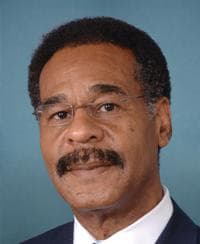
- Introduced
- 7/22/2026
- Last activity
- 7/22/2026 — Referred to the Committee on Energy and Commerce, and in addition to the Committee on Ways and Means, for a period to be subsequently determined by the Speaker, in each case for consideration of such provisions as fall within the jurisdiction of the committee concerned.
- Sponsored by
- Emanuel Cleaver
- Cosponsors
- None
- Introduced
- In Committee
What this bill would do
The CHARTS Act directs the Secretary of Health and Human Services to award grants to long-term care and post-acute care providers. These grants are intended to help providers develop and adopt health information technology. The Secretary must begin awarding these grants within 2 years of the act's enactment. Each grant is for a period of 3 years and cannot exceed $500,000 per provider. The goal is to improve the electronic exchange of data and the quality of care. The bill also requires the Secretary to submit reports to various Congressional committees regarding the grants and their outcomes.
Yes· 3 of 15
Would people over 65 be better off under this?+4
The bill focuses on improving technology for long-term and post-acute care providers who serve Medicare and Medicaid recipients, many of whom are seniors.
Does this make health care easier to get in general?+3
The bill aims to improve care quality and coordination through the adoption of new health information technology.
Does this reduce what the federal government spends?+3
The bill directs the evaluation of whether health information technology results in reduced Federal expenditures under Medicare and Medicaid.
The opposite
No question was scored the opposite.
Who it would affect, and how
Potential Positive Impacts for People
-
Improved Care Quality and Efficiency: Providers can use funds to implement tools like clinical decision support, care pathways, and monitoring to improve the effectiveness and quality of care (Section 2(d)(2)).
-
Better Care Transitions and Coordination: The technology is intended to facilitate communication and electronic data exchange among various health care providers and insurance entities (Section 2(d)(1)). This includes enhancing the transition of care between providers (Section 2(d)(3)(A)).
-
Addressing Patient Needs and Preventing Duplication: The use of funds aims to implement systems that address patient needs and prevent health care providers from performing duplicative services (Section 2(d)(3)(B) and (D)).
-
Focus on Vulnerable Populations: The Secretary is instructed to give priority to providers likely to improve health for those enrolled in Medicare or State plans, and to ensure a diverse sample of recipients based on geography, income, race, and ethnicity (Section 2(e)).
Potential Negative Impacts for People
- No specific negative impacts or burdens are explicitly stated in the provided text.
Groups and Interests Ranking
Every group the model scored this bill for, from -10 to +10. Hover a score for the reason it gave.
- Demographic And Interest Groups
- Good For Seniors+4Good For Low Income Households+2Good For People With Disabilities+2Good For African Americans+1Good For Asian Americans+1Good For Hispanic Americans+1Good For Native Americans+1Good For White Americans+1
- Healthcare
- Improves Healthcare Access+3Increases Medicaid Funding+2Increases Medicare Funding+2
- Social Issues And Justice
- Improves Racial Equity+2Improves Social Security+2
- Economy And Finance
- Reduces Government Spending+3
- Education And Technology
- Increases Scientific Research Funding+2
- 7/22/2026
- Referred to the Committee on Energy and Commerce, and in addition to the Committee on Ways and Means, for a period to be subsequently determined by the Speaker, in each case for consideration of such provisions as fall within the jurisdiction of the committee concerned.
- Introduced in House