Bill · H.R. 9792· House(119-HR-9792)
Employee Ownership Fairness Act of 2026
- Introduced
- 7/20/2026
- Last activity
- 7/20/2026 — Referred to the Committee on Ways and Means, and in addition to the Committee on Education and Workforce, for a period to be subsequently determined by the Speaker, in each case for consideration of such provisions as fall within the jurisdiction of the committee concerned.
- Sponsored by
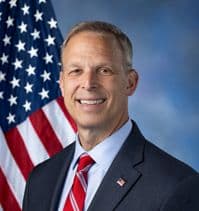
- Scott Perry
- Cosponsors
- None
- Introduced
- In Committee
What this bill would do
The Employee Ownership Fairness Act of 2026 aims to amend the Employee Retirement Income Security Act of 1974. It focuses on changing how contributions are counted for employee stock ownership plan (ESOP) participants. The bill seeks to allow these workers to benefit from the full amount of beneficial ownership in their plans. It also intends to help them realize the benefits of saving for retirement in defined contribution plans. This is intended to prevent company success from causing other plan contributions to exceed annual caps.
Yes· 3 of 8
Would middle-income households be better off under this?+4
The bill specifically helps employees in profitable companies maximize their retirement contributions and diversification.
Would people over 65 be better off under this?+3
The bill enhances retirement savings potential which benefits those approaching or in retirement.
Would business owners be better off under this?+3
The bill provides more flexibility for employers managing ESOPs and matching contributions.
The opposite
No question was scored the opposite.
Who it would affect, and how
Potential Positive Impacts for People
-
Improved Diversification and Savings: The bill addresses issues where ESOP employees are unable to make full use of defined contribution plans because company success causes their ESic balance to exceed annual caps. This change aims to allow employees to better diversify their retirement savings (Section 2, Findings (5) and (7)).
-
Increased Contribution Ability: By amending the Internal Revenue Code, the bill ensures that contributions of employer stock or contributions made to repay loans used to acquire employer securities are not included when applying certain contribution limits. This can prevent employers from having to deny matching contributions that employees would otherwise receive (Section 2, Findings (7); Section 3(a)(1); Section 3(b)(1)).
-
Separate Application of Limits: The bill requires that limitations be applied separately to an ESOP and any other defined contribution plan held by the employer. This allows for more flexibility in how retirement savings are managed and contributed (Section 3(a)(2); Section 3(b)(2)).
-
Treatment of Forfeitures: The bill specifies that forfeitures allocated to accounts under an ESOP shall not be taken into account as annual additions, which assists in the management of the plan's contributions (Section 3(a)(3); Section 3(b)(4)).
Potential Negative Impacts for People
- No specific negative impacts are explicitly stated in the provided text.
Groups and Interests Ranking
Every group the model scored this bill for, from -10 to +10. Hover a score for the reason it gave.
- Demographic And Interest Groups
- Good For Middle Class Households+4Good For Business Owners+3Good For Retirees+3Good For Seniors+3Good For Low Income Households+2Good For Union Workers+2
- Economy And Finance
- Improves Economic Growth+3
- Social Issues And Justice
- Improves Poverty Reduction+2
- 7/20/2026
- Referred to the Committee on Ways and Means, and in addition to the Committee on Education and Workforce, for a period to be subsequently determined by the Speaker, in each case for consideration of such provisions as fall within the jurisdiction of the committee concerned.
- Introduced in House
One bill Congress.gov lists as related to this one — companions in the other chamber, earlier versions, and bills this one absorbed or was folded into.