Bill · H.R. 9780· House(119-HR-9780)
BRRRRT Act of 2026
- Introduced
- 7/20/2026
- Last activity
- 7/20/2026 — Referred to the Committee on Armed Services, and in addition to the Committee on Foreign Affairs, for a period to be subsequently determined by the Speaker, in each case for consideration of such provisions as fall within the jurisdiction of the committee concerned.
- Sponsored by
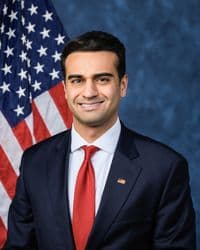
- Abraham Hamadeh
- Cosponsors
- - 4 - 1
- Introduced
- In Committee
What this bill would do
This bill, known as the "BRRRRT Act of 2026," establishes specific requirements for the Department of Defense regarding the A-10 aircraft fleet. It limits the divestment of A-10 aircraft to ensure a minimum inventory and operational capacity is maintained through fiscal year 2033. The Act mandates the preservation of retired aircraft in a recoverable condition and requires a roadmap for fleet sustainment. It also protects training functions at Davis-Monthan Air Force Base and Nellis Air Force Base. Additionally, the bill directs the creation of an A-10 demonstration team and a program to preserve technical and historical knowledge.
Yes· 3 of 7
Is this likely to create jobs?+3
The bill supports aircraft maintenance, training, and logistics capacity which helps sustain specialized military jobs.
Does this put more money into scientific research?+2
The bill encourages competitive experimentation and prototyping in autonomous and AI-enabled technologies.
Does this send more money or help to other countries?+2
The bill discusses the possibility of transferring A-10 aircraft to eligible foreign partners as security cooperation.
The opposite· 3 of 4
Does this reduce what is spent on the military?-3
The bill mandates the preservation and potential reconstitution of aircraft, which increases spending.
Does this reduce what the federal government owes?-2
The bill mandates maintaining and restoring aircraft capacity, which likely increases required defense spending.
Does this reduce what the federal government spends?-2
By preventing divestment and requiring capacity restoration, the bill increases long-term government expenditures.
Who it would affect, and how
Potential Positive Impacts for People
-
Maintaining Aircraft Inventory: The bill prevents the total A-10 inventory from falling below levels necessary for operational employment, pilot production, and testing through fiscal year 2033 (Section 2(a)(1)).
-
Protecting Training and Jobs: By requiring the Secretary of the Air Force to maintain sufficient training, maintenance, and logistics capacity, the bill helps ensure the operational viability of the fleet (Section 2(a)(3) and Section 3(b)(1)).
-
Preserving Military Bases: The bill restricts the transition of training functions away from Davis-Monthan Air Force Base unless specific feasibility and cost conditions are met (Section 3(a)(2)).
-
Preserving Knowledge and History: The establishment of a program to collect oral histories and digital archives helps preserve the technical and historical knowledge of those who operated and maintained the A-10 (Section 3(e)).
-
Promoting Heritage and Outreach: The creation of an A-10 demonstration team is intended to honor the combat legacy of the aircraft and promote pride in the United States Air Force (Section 4(b)).
Potential Negative Impacts for People
-
Restrictions on Divestment: The Secretary of Defense is prohibited from waiving certain requirements unless a fully capable replacement has achieved full operational capability, which could delay the transition to newer systems (Section 2(b)(1)).
-
Mandatory Capacity Restoration: If the Air Force previously reduced capacity in anticipation of retirement, they are required to submit a plan to restore that capacity, which may impact existing budget or personnel allocations (Section 2(a)(4)).
-
Strict Preservation Requirements: The requirement to maintain retired aircraft in a recoverable condition and the prohibition on cannibalizing certain aircraft may impact how the military manages its existing spare parts and resources (Section 2(c)(1) and Section 2(c)(3)).
Groups and Interests Ranking
Every group the model scored this bill for, from -10 to +10. Hover a score for the reason it gave.
- Economy And Finance
- Increases Job Creation+3Reduces Government Spending-2Reduces National Debt-2Improves Fiscal Responsibility-1
- Education And Technology
- Increases Scientific Research Funding+2
- Governance And Ideology
- Improves Government Transparency+1Increases Federal Power+1
- Demographic And Interest Groups
- Good For Business Owners+1
- National Security And Foreign Policy
- Increases Foreign Aid+2Improves International Alliances+1Reduces Military Spending-3
- 7/20/2026
- Referred to the Committee on Armed Services, and in addition to the Committee on Foreign Affairs, for a period to be subsequently determined by the Speaker, in each case for consideration of such provisions as fall within the jurisdiction of the committee concerned.
- 5 Cosponsors added.
- Introduced in House
 Donald Davis
Democrat · North Carolina
 Sam Graves
Republican · Missouri
 Cory Mills
Republican · Florida
 Richard McCormick
Republican · Georgia
 Derrick Van Orden
Republican · Wisconsin