Bill · H.R. 9770· House(119-HR-9770)
Continuing Appropriations Act, 2027
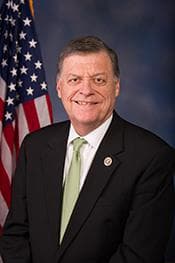
- Introduced
- 7/18/2026
- Last activity
- 7/22/2026 — Received in the Senate.
- Sponsored by
- Tom Cole
- Cosponsors
- None
- Introduced
- Passed House
- Awaiting Senate
What this bill would do
This act, known as the "Continuing Appropriations Act, 2027," provides temporary funding for various government departments and agencies. It establishes that funds will be provided at rates necessary to continue existing projects and activities from fiscal year 2026. The bill includes specific restrictions on Department of Defense production and certain administrative spending. It also outlines how mandatory payments and specific programs, like WIC and wildfire suppression, will be handled. Most funding under this act is set to expire on December 4, 2026, unless new legislation is passed.
Yes· 3 of 14
Would Native Americans be better off under this?+2
The bill provides additional funding specifically for Indian Health Services.
Does this make health care easier to get in general?+2
The bill provides additional funding for the staffing and operation of specific Indian Health Service facilities.
Does this make it easier to run a small business?+2
The bill allows the Small Business Administration to accommodate increased demand for business loans and guarantees.
The opposite
Does this reduce what the federal government spends?-2
The bill implements spending restrictions and requires agencies to reduce non-personnel administrative expenses.
Does this reduce what is spent on the military?-1
The bill restricts new production and production increases for the Department of Defense.
What Congress actually voted on
One recorded vote has been taken on this bill.
- The House: the vote on whether to pass the billPassed 220–205
This is the real decision in this chamber. Passing here sends the bill to the other chamber, which must pass it too before it can go to the President.
07/21/2026 · Roll call 272 · recorded as “On Passage”
Who it would affect, and how
Potential Positive Impacts for People
-
Maintaining Program Levels: Entitlements and mandatory payments will continue at rates necessary to maintain current program levels (Section 111).
-
Employment Stability: Funding for civilian personnel compensation and benefits can be used at rates necessary to avoid furloughs in various departments and agencies (Section 112).
-
Nutrition Support: The Special Supplemental Nutrition Program for Women, Infants, and Children (WIC) can be funded at rates necessary to maintain participation (Section 116).
-
Small Business Support: The Small Business Administration can access funds to accommodate increased demand for certain business loans and guarantees (Section 118).
-
Disaster Response: Funding is available for the Federal Emergency Management Agency to carry out response and recovery activities (Section 122).
-
Wildfire Management: Funds can be used for necessary wildfire suppression activities through the Department of the Interior and the Department of Agriculture (Section 125).
-
Indian Health Services: Additional money is provided for staffing and operating facilities that were opened, renovated, or expanded in specific years (Section 123).
Potential Negative Impacts for People
-
Restrictions on Defense Production: The Department of Defense is prohibited from using these funds for the new production of items not funded in 2026 or prior years, or for increasing production rates (Section 102).
-
Limiting New Projects: Most agencies are barred from initiating or resuming any projects or activities that did not have available funding during fiscal year 2026 (Section 104).
-
Restrictions on Grant Distribution: Programs that typically distribute high amounts of funding at the start of a fiscal year to States, foreign countries, or grantees are restricted from making those high initial distributions or awards (Section 109).
-
Administrative Reductions: To receive funding for civilian personnel, agencies must first take all necessary actions to reduce or defer non-personnel-s-related administrative expenses (Section 112).
Groups and Interests Ranking
Every group the model scored this bill for, from -10 to +10. Hover a score for the reason it gave.
- Demographic And Interest Groups
- Good For Native Americans+2Good For Business Owners+1Good For Children+1Good For Low Income Households+1Good For Retirees+1Good For Seniors+1Good For Women+1
- Environment Energy And Infrastructure
- Improves Disaster Relief And F E M A+1Improves Public Land Management+1
- Healthcare
- Improves Healthcare Access+2
- Social Issues And Justice
- Improves Poverty Reduction+1Improves Social Security+1
- Economy And Finance
- Improves Small Business Support+2Improves Fiscal Responsibility+1Reduces Government Spending-2
- National Security And Foreign Policy
- Reduces Military Spending-1
- 7/22/2026
- Received in the Senate.
- 7/21/2026
- Motion to reconsider laid on the table Agreed to without objection.
- Passed/agreed to in House: On passage Passed by the Yeas and Nays: 220 - 205 (Roll no. 272).
- On passage Passed by the Yeas and Nays: 220 - 205 (Roll no. 272). (text: CR H4731-4733)
- Considered as unfinished business. (consideration: CR H5019-5020)
- POSTPONED PROCEEDINGS - At the conclusion of debate on H.R. 9770, the Chair put the question on passage of the bill and by voice vote, announced the ayes had prevailed. Ms. DeLauro demanded the yeas and nays and the Chair postponed further proceedings until a time to be announced.
- The previous question was ordered pursuant to the rule.
- DEBATE - The House proceeded with one hour of debate on H.R. 9770.
- Rule provides for consideration of H.R. 8800, H.R. 8884, H. Con. Res. 113, H.R. 7008, H.R. 6955 and H.R. 9770. The resolution provides for consideration of H.R. 8800 under a structured rule and for consideration of H.R. 8884, H. Con. Res. 113, H.R. 7008, H.R. 6955, and H.R. 9770 under a closed rule, with one hour of debate on each measure and one motion to recommit on H.R. 8800, H.R. 8884, H.R. 7008, H.R. 6955, and H.R. 9770.
- Considered under the provisions of rule H. Res. 1438. (consideration: CR H4731-4736)
- Rule H. Res. 1438 passed House.
- 7/20/2026
- Rules Committee Resolution H. Res. 1438 Reported to House. Rule provides for consideration of H.R. 8800, H.R. 8884, H. Con. Res. 113, H.R. 7008, H.R. 6955 and H.R. 9770. The resolution provides for consideration of H.R. 8800 under a structured rule and for consideration of H.R. 8884, H. Con. Res. 113, H.R. 7008, H.R. 6955, and H.R. 9770 under a closed rule, with one hour of debate on each measure and one motion to recommit on H.R. 8800, H.R. 8884, H.R. 7008, H.R. 6955, and H.R. 9770.
- 7/18/2026
- Referred to the Committee on Appropriations, and in addition to the Committee on the Budget, for a period to be subsequently determined by the Speaker, in each case for consideration of such provisions as fall within the jurisdiction of the committee concerned.
- Introduced in House
One bill Congress.gov lists as related to this one — companions in the other chamber, earlier versions, and bills this one absorbed or was folded into.